Validating a 3D-printed medicine from digital recipe to release
A requirements-led plan for content uniformity, dissolution, stability, digital provenance, batch definition and change control.
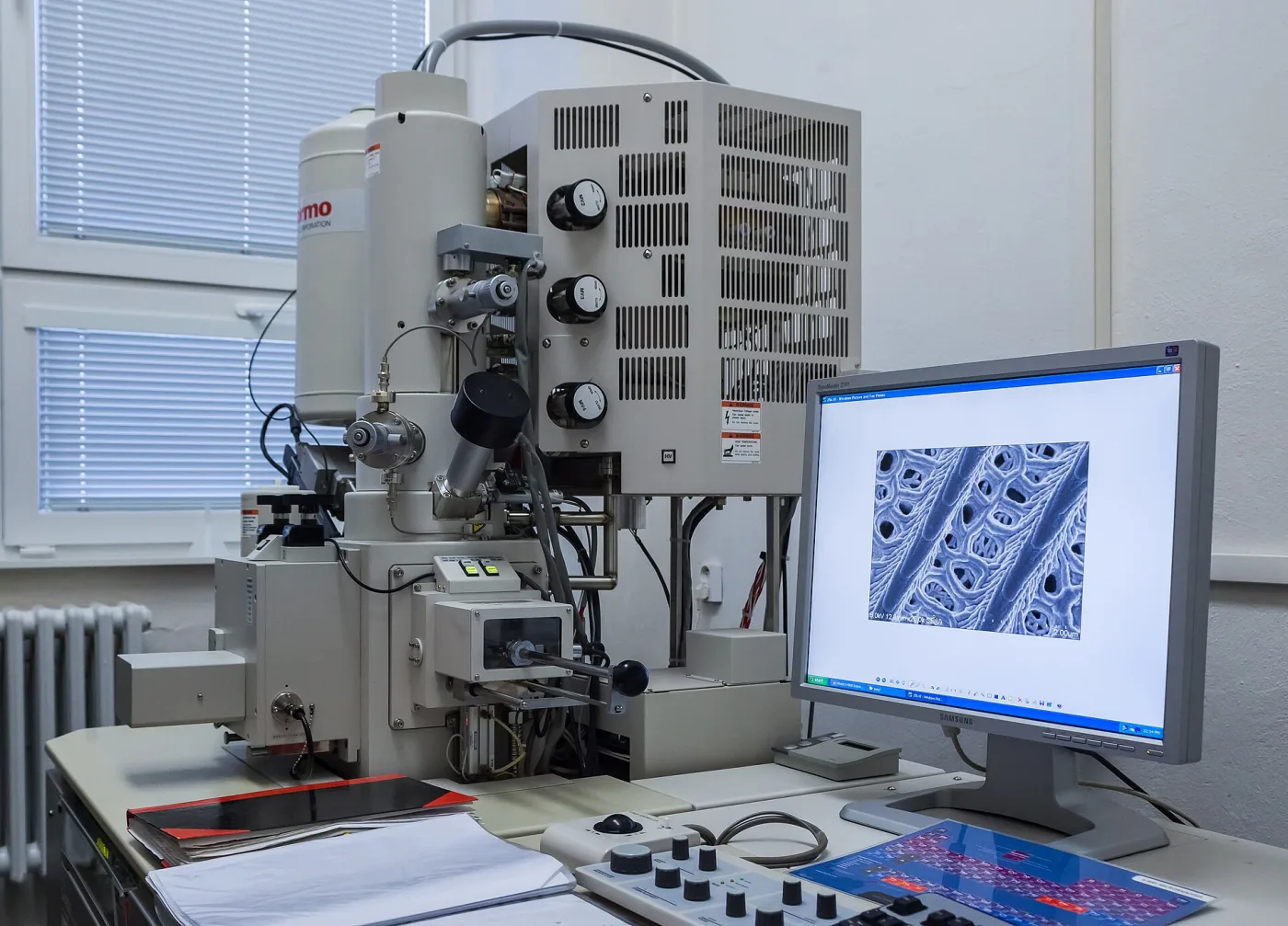
A 3D-printed medicine is not controlled merely because the machine completed its job without an error. The release evidence chain runs from a patient- or batch-linked digital prescription through materials, blending, printing and post-processing to content, dissolution, stability and traceability. This Knowledge Base article provides a requirements-led framework for validating solid oral dosage forms; it does not replace pharmaceutical, regulatory or clinical advice.
1. Define the target and critical quality attributes
Start with the Quality Target Product Profile: active ingredient, dose, population, route, size, shape, handling strength, disintegration, dissolution profile, shelf life and packaging. Derive critical quality attributes from it. Failure differs between immediate-release and enteric or multi-phase structures; the latter needs separate limits for premature leakage and payload remaining after the target phase.
2. Link material and process through risk analysis
Following ICH Q8, Q9 and Q10, map which material attributes and process parameters can change the product: API particle size and polymorph, excipient moisture, blend flow and homogeneity, filament or paste rheology, heat and shear exposure, nozzle or exposure settings, layer height, infill, shell, geometry, cooling and post-processing. Risk ranking is not evidence; test it through designed experiments.
3. Treat the digital recipe as a controlled manufacturing instruction
CAD, slicer project, machine profile, material identity and parameter file form the digital master. Every released version needs a hash, approver, date, compatible machine and software versions, and rollback point. Local edits require change control. For patient-specific doses, an automated check should compare the clinical order with approved dose and geometry ranges so a transcription error cannot become a printed product.
4. Control raw materials and blends
Record API and excipient identity, purity, water content, particle size and lot. With extrusion feedstock, compounding and filament production are separate processes: heat may cause degradation, particle distribution may cause segregation, and diameter variation may change mass. Paste or binder-jet routes add viscosity, settling, binder concentration and wetting. Sampling locations and counts must detect gradients within the vessel.
5. Establish equipment suitability and a process window
After installation and operational qualification, use a reference material to demonstrate repeatable temperature, feed, motion, mass deposition and environmental control. DOE should find an acceptable window, not one good setting. Build at its edges: low and high temperature, speed, flow, exposure or binder dose reveal where content, porosity, dimension or release begins to fail.
6. Content uniformity and dose accuracy
Mass uniformity is not active-content uniformity. A unit can have the right mass while its blend is segregated or its API has degraded. A validated analytical method must test individual units across the beginning, middle and end of a build, positions in the build area and multiple feedstock lots. USP <905> frames dosage-unit uniformity; the applicable monograph and product specification determine the exact acceptance rule.
7. Dissolution: geometry is part of formulation
In 3D printing, infill, surface-to-volume ratio, channels, shell thickness and multi-material interfaces are formulation variables. USP <1092> and FDA dissolution guidance call for a discriminating, reproducible method that detects meaningful process change. Modified release needs multiple time points, appropriate media changes and a full payload balance. In-vitro–in-vivo correlation requires separate evidence.
8. Mechanical, chemical and microbial stability
A tablet must survive removal, packaging, transport and dosing without changing release. Test fracture or friability, moisture uptake, API and excipient degradation, interactions and, where the process warrants it, microbial burden. Stability programmes need real-time and accelerated storage, the actual packaging, light, humidity and temperature. Printed variants cannot automatically inherit one shelf life.
9. Define a batch for distributed or patient-specific production
A batch may be units made from one feedstock lot and approved digital master within a defined period; patient-specific production may reduce it to one dosing series. The definition must support recall and trending. Record machine, nozzle or light source, calibration, environment, operator, software, file hash, material lot, process log, in-process result, analytical sample and releasing person.
10. Connect process analytics to final testing
Mass, image, temperature, pressure or spectral sensors can detect drift quickly, but replace destructive tests only after validated correlation. Define measurement uncertainty, false-accept and false-alarm rates, missing-data handling and required action. Retraining a model or updating software is a controlled change.
11. Release and deviation handling
Predefine release criteria for documentation, material identity, in-process parameters, appearance, mass, assay, uniformity, dissolution and, as required, impurities and microbiology. A borderline or out-of-specification result cannot be erased by repeated testing; investigation must distinguish laboratory from manufacturing failure. Reject, remake and patient-notification routes should already exist.
12. Change control and continued process verification
Risk-assess and requalify changes in API supplier, excipient lot, filament diameter, machine, nozzle, firmware, slicer, geometry, packaging or analytical method. Trend dose deviation, dissolution profile, scrap, reprints, downtime, alarms, complaints and stability results. A state of control is maintained evidence, not a one-time validation report.
Minimum evidence package
At minimum: approved target profile and specification; risk analysis; material and supplier qualification; locked digital master; equipment IQ/OQ/PQ; process-window DOE; validated analytical methods; content uniformity; discriminating dissolution; stability plan; batch and traceability rule; deviation, CAPA and change control; and a trained, independent release role.
Editorial conclusion
The value of 3D printing may lie in programmable dose and release, but that freedom multiplies variants. Safe scale-up depends on a validated design space, a controlled digital recipe and analytics proving that each individual unit remains inside the approved range—not on restarting validation from zero for every geometry.
Sources
The framework draws on FDA advanced-manufacturing and solid-dosage documentation, ICH Q8/Q9/Q10, USP <905> and <1092>, and NIST Quality by Design work on printable tablets. FDA's Spritam quality assessment provides a concrete regulatory example of an approved 3D-printed product.