Forensic identification of 3D-printed polymers from sample to report
A validation plan for sampling, FTIR, DSC, chemometrics, blind testing, error rates and bounded expert conclusions.
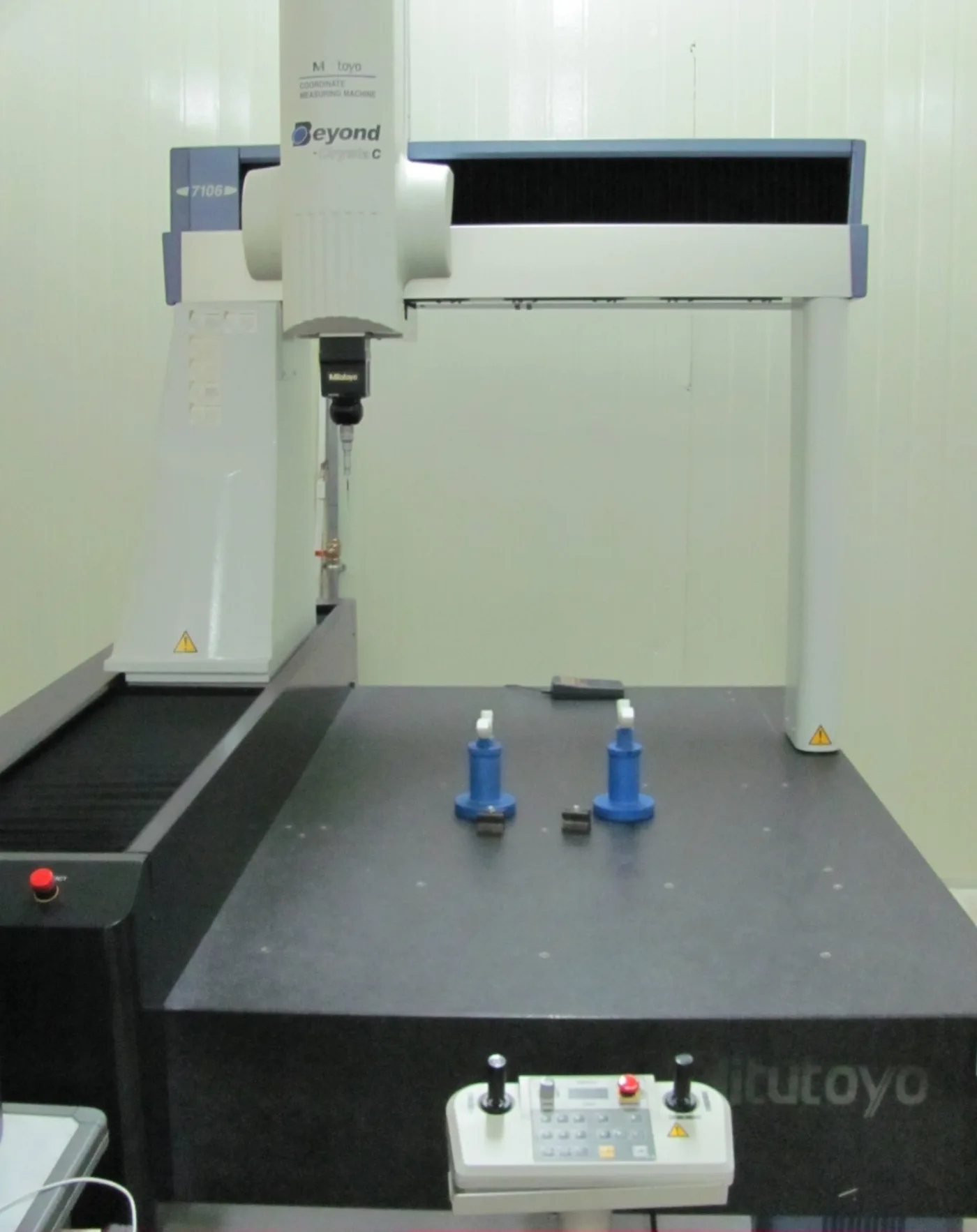
A 3D-printed polymer object is rarely identified defensibly by one instrument and even less often traced uniquely to one spool. A sound forensic workflow first fixes the question — polymer family, product group, common batch or exclusion — and then validates complementary measurement chains. This is a laboratory quality framework, not legal advice.
1. The question defines the evidence
Showing that an item is PLA requires different evidence from associating two samples with a reference spool. Unique source attribution is the strongest claim and needs a representative market population, within- and between-lot variation, blind testing and an error rate. Without those elements, a report should state class identity, compatibility or exclusion only.
2. Sampling and chain of custody
Document the object with photographs, mass, dimensions, packaging, seals and every transfer. Sampling location matters: outer wall, infill, heat-discoloured nozzle region and support may differ. Take several separately labelled portions when possible and retain material for repeat work. For references, record brand, grade, colour, diameter, lot, package, purchase, storage and opening.
3. Contamination and mixed material
Adhesive, paint, dust, skin oil, solvent, residual nozzle polymer and multi-material printing can add signals. Map layers and foreign regions by stereomicroscopy, then sample separately with clean tools. Grinding the whole object averages heterogeneity and may hide a second polymer or surface coating.
4. ATR-FTIR for polymer family
ATR-FTIR produces a rapid vibrational spectrum and is a strong first-line method for separating PLA, ABS, PETG, PA, PC and TPU. A library hit is not a verdict: pigment, filler, moisture, ageing and contamination can distort it. Validate contact, wavenumber accuracy, resolution, background correction, library version, match threshold and between-operator repeatability.
5. DSC and the thermal-history problem
DSC measures glass transition, crystallisation, melting and enthalpy. In semi-crystalline PLA these may reflect resin, pigment, additive and processing differences. Printing creates a new thermal history, so a first heating curve from a part cannot be compared naively with the spool. Controlled first heating, cooling and second heating can reduce the difference; cycle, mass, pan, atmosphere and ramp must be predefined.
6. TGA, Raman and pyrolysis GC/MS
TGA can reveal decomposition, volatile fractions and inorganic residue. Raman can help with pigments and some polymers but may suffer fluorescence. Pyrolysis GC/MS can provide higher chemical resolution for polymer and additives, but it is destructive, complex and method-dependent. Use these only when they reduce a defined uncertainty left by earlier steps.
7. Microscopy and elemental evidence
Optical or electron microscopy can examine layers, pigment particles, fibres, pores and contamination. SEM-EDS can support elemental comparison of inorganic fillers and pigments but does not identify the organic matrix alone. Preparation, coating and area selection enter the uncertainty budget.
8. Chemometrics with a locked pipeline
Spectra and thermograms are multivariate. Lock baseline treatment, smoothing, derivatives, normalisation and feature selection before model testing. PCA is exploratory, not classification proof by itself. For supervised models, split training, validation and blind test data by lot or spool; nearby replicates from one source across splits create leakage and inflated performance.
9. Reference population and sample size
A background database should cover relevant brands, colours, lots, years, supplier changes, recycled content and storage. One spool per brand represents a product sample, not the brand population. Plan sample size around expected similarity and tolerated error; a rare or strongly pigmented specimen is not automatically unique.
10. Blind testing and unknown classes
Validation must include specimens absent during model development and truly unknown brands or mixtures. The system needs a valid 'no suitable reference' outcome. An algorithm forced to choose a known class is dangerous in forensic work. Acceptance, rejection and uncertainty thresholds must be fixed in advance.
11. Error rates and decision performance
Measure false association, false exclusion, inconclusive result and operator disagreement separately. One accuracy figure can hide class imbalance. Report a confusion matrix, class-level sensitivity and specificity, repeatability, reproducibility and the effect of threshold changes. Small datasets produce wide confidence intervals; the report should show them.
12. Environmental and manufacturing robustness
Heat, UV, moisture, water, soil, cleaners and time may change a polymer. Nozzle temperature, speed, cooling, layer height, annealing and repeated melting also matter. A robustness study should test these factorially or at boundaries and determine when only a polymer-family conclusion remains defensible.
13. Instrument and software state
Every run should link to calibration, control sample, instrument ID, software and library versions, raw data and analysis hash. A version change needs a regression set. If a control is out of limits, identify affected earlier results rather than merely repeating the next run.
14. Inter-laboratory comparison
A model that works in one laboratory may not transfer to another instrument vendor. A round-robin should use the same blind specimens, a common protocol and independent analysis. Between-laboratory variance shows which features are stable and where instrument-specific calibration or transfer models are needed.
15. Reporting and strength of conclusion
Separate observation, model output and expert interpretation. List alternatives considered, database scope, environmental history, error rate and deviations. 'Indistinguishable for the measured properties' does not mean 'from the same spool'. Wording cannot be stronger than the validation.
16. Minimum release checklist
Routine use requires an approved target claim, sampling procedure, reference database, instrument suitability, version-locked analysis, blind performance, unknown-class handling, error rates, trained operators, environmental scope, raw-data retention and expert review. Every new material family or supplier and software change triggers change control.
Sources and editorial conclusion
The practical starting point is the Curtin–ChemCentre PLA study and open dataset linking DSC, thermal-history normalisation and chemometrics. ASTM E2927 forensic method-validation principles and ISO/IEC 17025 laboratory competence provide the wider quality frame. Our conclusion is that the strongest result is not the most impressive-looking algorithm, but the bounded claim whose error, scope and raw evidence can be audited.