AIM3D prepares an ULTEM 9085 pellet process for aerospace MRO
ExAM A 510 controls chamber and feed conditions for repeatable properties; machine and process validation is not part approval.
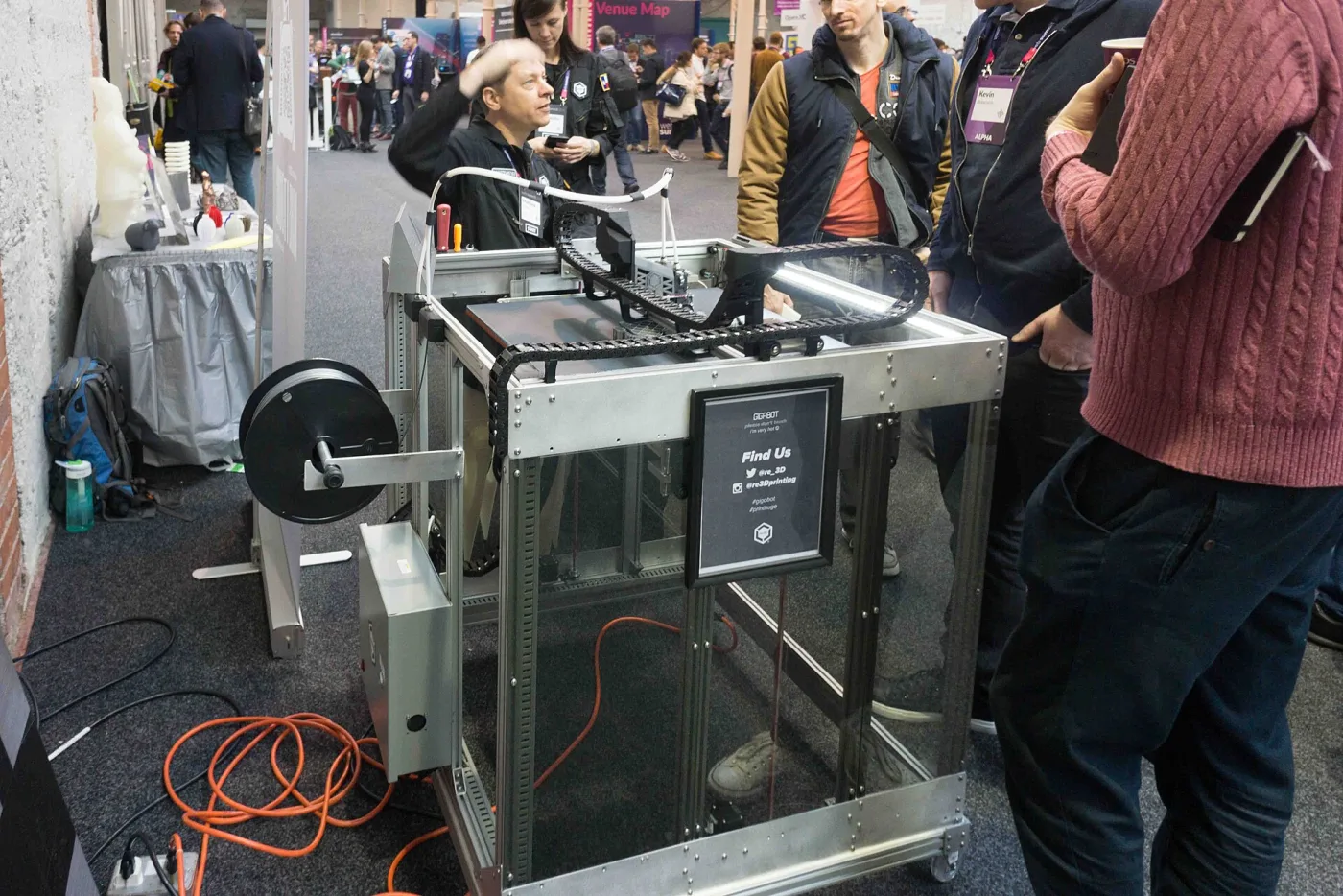
AIM3D and AM-MRO have modified the pellet-fed ExAM 510 material-extrusion platform for aerospace use. The resulting ExAM A 510 focuses on stable processing of ULTEM 9085, tensile properties that are less dependent on machine and build position, and a documented manufacturing package. This is a meaningful process-validation step, but the supplier's use of “certified” does not mean that an aviation authority has approved every part made on the machine.
What changed from the standard ExAM 510?
The company highlights chamber-temperature uniformity and controlled feed temperature, dryness and tamper protection. The chamber is actively heated on all sides and a camera replaces the large viewing window, which could act as a thermal bridge. The objective is to reduce changes in pellet condition and the surrounding thermal field during a long build.
The base platform lists a 510 × 510 × 410 mm build space, up to three extruders, a 275°C plate and CEM-E3 extruders rated to 425°C. These are supplier specifications; the final A configuration and every aerospace option need verification in the delivered system documentation.
Why moisture and thermal history matter for ULTEM 9085
PEI-based ULTEM 9085 is known in aerospace for heat resistance and flame, smoke and toxicity performance. Qualified feedstock does not automatically qualify a printed part. Moisture can create bubbles, surface defects and property variation, while a non-uniform chamber can drive warpage, weak interlayers and different relaxation histories.
Screw-based pellet extrusion creates different shear and residence time from filament feeding. Pellet size distribution, bulk density, drying, regrind fraction and screw wear therefore belong in the control plan. A process window must do more than produce one good coupon: it must remain stable across material lots and maintenance states.
Interpreting position and direction independence
AIM3D says the ExAM A 510 had to demonstrate consistent ULTEM 9085 tensile strength regardless of machine position and build direction. This does not necessarily mean full isotropy; it means results stayed within an acceptance band in a defined test matrix. The public material does not disclose full sample count, scatter, exact orientations, conditioning or limits.
Earlier AIM3D data from 2023 reported 85.7 MPa tensile strength and 12.3% elongation in XY, and 42 MPa in XZ, for pellet-printed ULTEM 9085. Those are earlier company material-qualification data, not the complete 2026 ExAM A 510 certification record. Comparison needs coupon standard, conditioning, plate position, surface and statistics.
Cost claim: what does 60% include?
The supplier says an ULTEM 9085 part made from pellets costs just under 60% of the equivalent filament route. This is a company model, not proof that every factory saves 40%. Full cost includes machine time, energy, drying, labour, scrap, supports, finishing, inspection, depreciation, inventory and quality assurance.
Pellet feedstock can be cheaper because filament conversion is removed. Aerospace traceability, closed material handling and inspection add cost. Compare the same part at the same accepted yield and across the complete cycle.
MRO and distributed production
AIM3D highlights on-demand local spare-part production. This may reduce inventory and lead time, but without site equivalence for digital files, material lots, machine state and inspection, distribution increases risk. The approval package must identify which part, configuration and facility may manufacture.
Aerospace use separates material suitability, process qualification, machine capability and part approval. A cabin component with flame, smoke and toxicity requirements may need different evidence from a structural or pressure-bearing part. Neither the ULTEM brand nor a feedstock certificate approves a finished part by itself.
Adoption gates
A factory should first define the requirement and applicable aviation standard. Then validate material receipt and drying, map chamber temperature, calibrate extrusion and feeding, run a multi-position coupon matrix, inspect dimensions and surface, perform tensile and where needed fatigue tests, and establish complete work instructions and change control.
A camera is useful for monitoring, but becomes a quality-assurance tool only with known resolution, field of view, detection limit, alarm logic and defect-linked decision. The same applies to temperature and moisture data: without storage, time synchronisation and retrieval, they are only displayed values.
Editorial conclusion
The ExAM A 510's genuine advance is a more disciplined and documented version of high-temperature pellet printing. Aerospace value comes not from the A in its name or a broad “certified” label, but from audited capability data, configuration control and part-specific approval. Pellet economics should be measured as total cost per accepted good part.
Sources and transparency
AIM3D-supplied trade material and TCT support the 2026 development claims. Machine specifications and 2023 mechanical data come from AIM3D's official pages. The complete 2026 certification record, airframer approval and part-level regulatory decision are not public.