Axtra3D combines automated washing with thermal treatment to 250°C
Wash Series 1 uses two 50-litre tanks; Cure Series 1 combines three UV wavelengths with a programmable thermal oven.
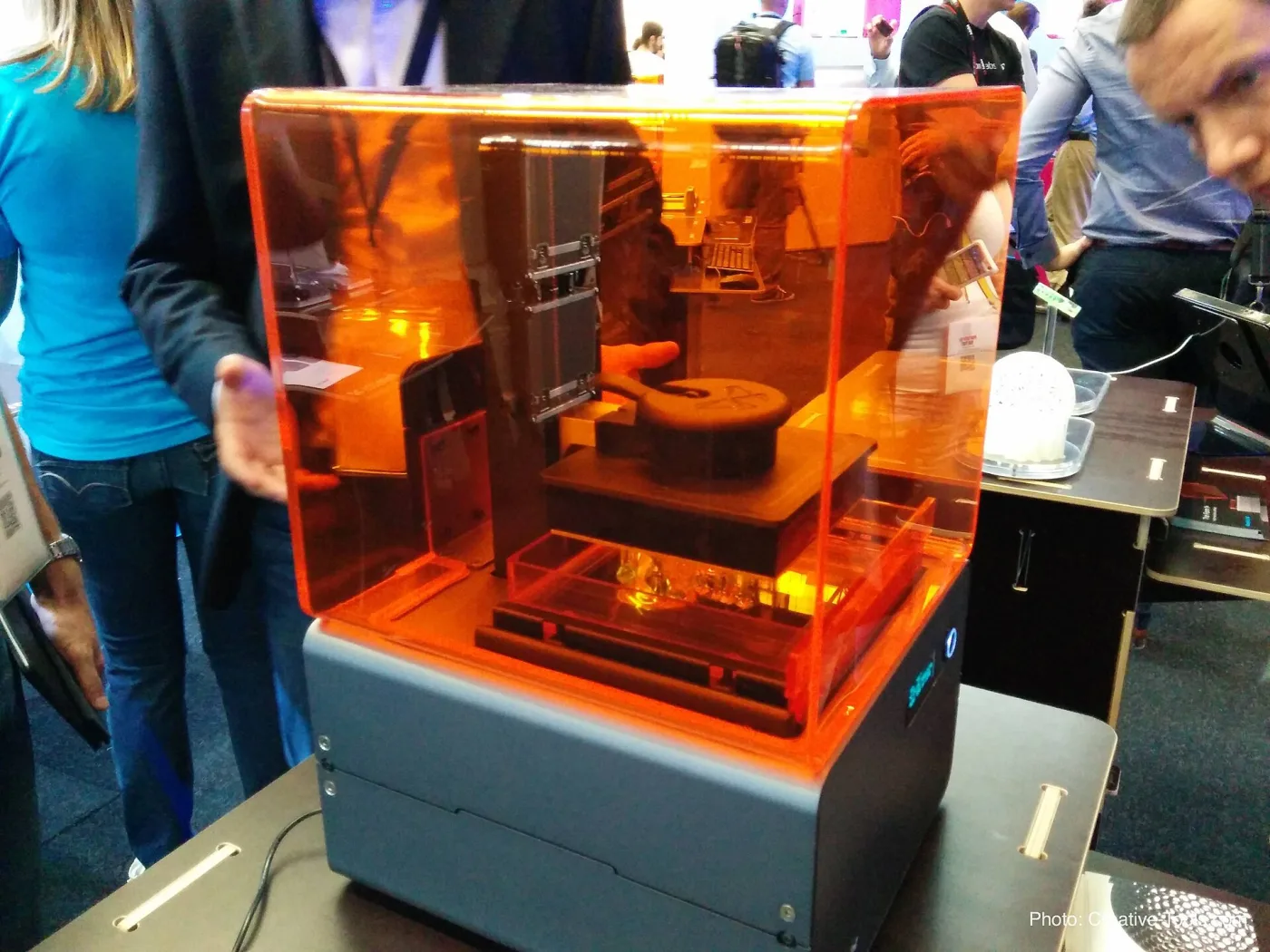
Axtra3D opened orders on 11 November for Axtra Wash Series 1 and Axtra Cure Series 1 industrial post-processing systems. Wash automates cleaning and compressed-air drying of photopolymer parts; Cure combines an independently controlled UV chamber with a programmable thermal oven rated to 250°C.
What Axtra Wash automates
Wash uses two removable 50-litre tanks, automated part handling and detergent loading and unloading. Axtra3D specifies proprietary agitation, Venturi and nanobubble eductor technology, plus a travelling air knife for drying. A stainless-steel tub, self-cleaning chamber, end-of-cycle exhaust, filtration and monitoring provisions target repeatable industrial operation.
The system is designed for non-flammable detergents and supports multiple solvent modes. That does not make one chemistry or cycle suitable for every resin. Material instructions, geometry, blind holes, residual resin and detergent loading still require a defined process window.
What Cure Series 1 adds
The upper UV chamber and lower thermal oven can run independently or in a combined recipe. Its UV chamber has 324 LEDs with separately configurable 365, 385 and 405 nm wavelengths, programmed time and power, broadband photodiodes for light-power monitoring and temperature sensing.
The oven supports automatic or custom thermal ramps to 250°C. A high equipment limit is not permission to process every photopolymer at that temperature. Recipes must be tied to material chemistry and mechanical requirements and demonstrated on worst-case geometry.
Connected workflow and wider compatibility
Axtra3D positions both stations within Axtra Workflow alongside Lumia X1 and Axtra.insight software. It says profiles and results become more visible and that the machines can also serve SLA, DLP and related photopolymer processes. The announcement provides no compatibility matrix, cycle time, capacity, price or standardised benchmark.
A network connection alone is not process integration. Print lot, detergent condition, wash and dry recipe, UV dose, thermal profile, operator intervention and release measurement need to form one traceable record.
Validation required
Washing needs evidence for surface residue, internal channels, detergent concentration and loading, drying and cross-contamination. UV work needs spectrum, irradiance, spatial uniformity, shadowing and chamber temperature; thermal work needs ramp, soak, cooling and internal part temperature. Mechanical, dimensional, colour and biocompatibility outcomes must be verified across the complete chain.
Verified fact, vendor claim and conclusion
Configuration and order availability are verified from the primary company release. Simpler, more consistent and efficient production is Axtra3D's value claim; no independent comparison is public. Our conclusion is that combining light and heat treatment in one recipe-controlled system is the key change. Operational value will depend on dose and thermal mapping, material-specific profiles, lot traceability and long-term capability data.
Sources
The lead and currently only complete technical source is Axtra3D's company release dated 11 November 2026. Scope is therefore limited to the disclosed configuration and vendor claims; no independent production test is available.