EU MDR conformity for dental 3D printing: a complete evidence map
A practical guide from intended purpose and classification through QMS, biological and clinical evidence, process validation and PMS.
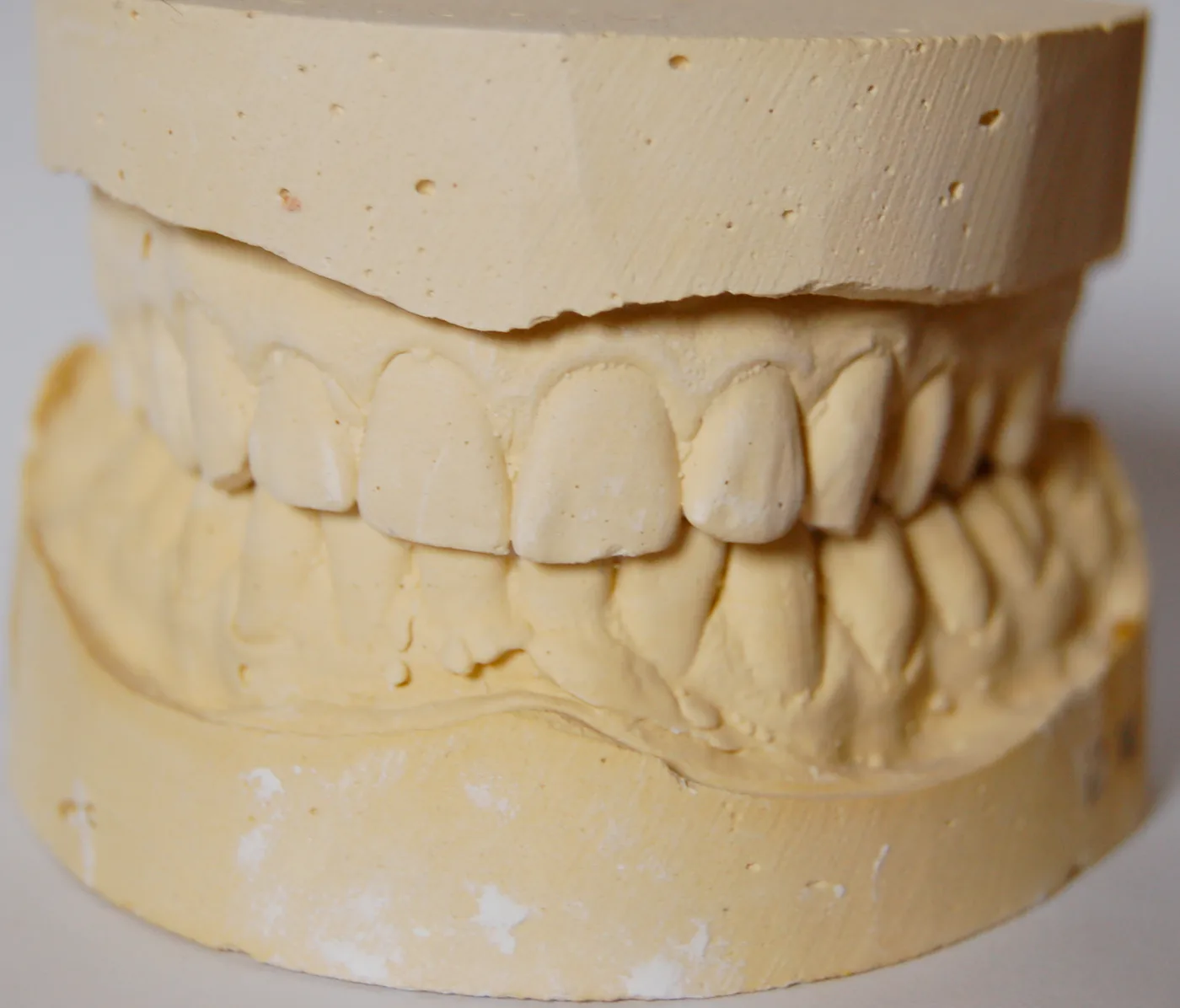
EU MDR conformity for dental 3D printing is not a resin's CE mark or one successful test part. It needs a connected evidence chain from intended purpose and classification through quality, risk, biological and clinical evidence to validated production and post-market surveillance. This guide is a professional map for manufacturers and laboratories, not legal advice.
1. Intended purpose defines the evidence target
State what is placed on the market: printable material, intermediate product, finished restoration, aligner, surgical guide, model or manufacturing system. Define patient group, anatomical site, contact, duration, reuse, user and environment. The same chemistry can require different evidence for another purpose.
Marketing claims can shape intended purpose. A long-term crown, shape-memory aligner or surgical-guidance claim must be supported throughout technical and clinical documentation. Broad communication creates a regulatory burden that generic literature cannot satisfy.
2. Custom-made, patient-matched and mass-produced differ
MDCG 2021-3 describes a custom-made device as made under a qualified person's written prescription for one patient's exclusive needs with specific design characteristics. A product matched to anatomy inside a validated design envelope and reproducible process may be patient-matched rather than custom-made.
3D printing does not itself confer custom-made status. Products from standard templates, scaling or series-capable processes may follow the standard MDR pathway. Document classification and conformity strategy for each product with competent regulatory expertise.
3. Roles in the digital chain
Identify legal manufacturer, authorised representative, importer, distributor, material and software suppliers and production laboratory. Brand owner and invoice issuer are not necessarily the MDR manufacturer. The legal manufacturer owns intended purpose, technical documentation, QMS, declaration and PMS.
Contracts must allocate profile approval, washing and curing programmes, changes, deviations and release. Outsourced printing does not outsource responsibility. Supplier qualification, audit and monitoring belong in the QMS.
4. Quality system and documentation architecture
ISO 13485:2016 is a widely used QMS framework, while the objective is compliance with applicable MDR requirements. Processes are needed for documents, change, suppliers, competence, maintenance, measurement, nonconformity, CAPA, complaints, recall and management review.
Technical documentation links requirements to evidence. For every general safety and performance requirement, record applicability, method, standard, test and result. A folder of PDFs without a traceability matrix is not an auditable system.
5. Life-cycle risk management
Following ISO 14971:2019 logic, identify hazards, estimate and evaluate risk, apply controls, assess residual risk and review production and market information. Dental-AM risks include wrong patient or file, orientation, exposure, contaminated wash, inadequate cure, residual monomer, dimensional error, fracture, wear and labelling.
Control hierarchy matters: safe design, protective measures, then information. A warning does not replace a capable process. Link the risk file to usability, biology, clinical evaluation, validation, PMS and CAPA.
6. Material and biological evaluation
ISO 10993-1:2025 calls for risk-based biological evaluation based on contact and duration. A raw resin safety sheet does not prove the biological safety of the printed, washed, cured and finished device. Final state, surface, residues and leachables matter.
Plan chemical characterisation and toxicological evaluation. Document formulation, supplier change, initiator, pigment, filler, wash, cure and polish. Test specimens should represent the worst accepted process state, not a separately optimised laboratory sample.
7. Mechanical, chemical and functional performance
Select tests for intended use: flexure, fracture, wear, hardness, sorption, solubility, colour, fit, force delivery or sterilisation compatibility. ISO 4049 and ISO 20795 may apply to certain polymer restorative or denture-base materials, but scope must be checked.
Challenge orientation, layer, build position, lot, printer, wash load, cure-lamp ageing and geometry. Report scatter and predefined acceptance, not only averages. Accelerated ageing is meaningful only through a validated model, not as automatic proof of clinical years.
8. Clinical evaluation and equivalence
Clinical evaluation is continuous. Quality, relevance and sufficiency of clinical data must match purpose and risk. Equivalence needs technical, biological and clinical comparison plus adequate access to comparator data. Similar chemistry or indication alone is insufficient.
Novel mechanisms, longer contact or strong claims may require own preclinical and clinical evidence. Link clinical evaluation to risk, IFU, PMS and, where needed, PMCF. A notified body may assess these interfaces.
9. Printing and post-processing validation
Define authorised printers, software and firmware, profiles, orientation, supports, layer, environment, material handling, washing, drying, curing and finishing. Parts at process-window boundaries should reveal where safety or performance deteriorates.
Installation, operational and performance qualification should show that equipment is installed, controllable and repeatedly makes conforming product. Measurement systems also need capability. An uncalibrated UV meter, excessive scan uncertainty or variable wash can hide drift.
10. Software, files and data integrity
Control the patient-data path from scanner through CAD, nesting and slicing to the machine. Version, hash, access, audit log, backup and proportionate cybersecurity preserve integrity. Manual repair and AI steps can alter clinically significant geometry.
Validate software for intended use, inputs, outputs and error handling. Updates need risk-based regression tests. Cloud-service changes do not remove the legal manufacturer's control duty.
11. Labelling, UDI and release
Labels and IFU define purpose, contraindications, compatible equipment, processing limits, storage, expiry and warnings. Lot and device identity should trace to patient and production record while respecting privacy.
Release reviews material lot, file, machine, profile, wash, cure, deviations and final inspection. A printer's 'success' message is not quality release.
12. Notified body, certificate and CE
Risk class and route determine notified-body involvement. Commission material notes that most devices above Class I require a certificate. The body may assess QMS and technical documentation, audit and review PMS information.
For certificate news, verify issuer, number, manufacturer, site, product group, procedure, limitations, issue, expiry and suspension. Completed final review is not an issued certificate; a certificate does not replace local adherence to the validated process.
13. PMS, vigilance and PMCF
A PMS plan defines complaints, failures, outcomes, trends and literature to collect. Vigilance covers serious incidents and safety corrective actions. PMCF addresses remaining clinical uncertainty where needed.
Trend production and market records by fracture, fit failure, reprint, staining, irritation, force loss, lot and site. Signals should update risk, clinical evaluation, IFU or process. PMS is a feedback control, not annual paperwork.
14. Change control
A new ingredient, supplier, pigment, printer, light source, profile, software, wash, curing unit, lab, package or intended purpose is a change event. Predetermine which changes need review, partial testing, full revalidation or notified-body discussion.
Assess chemistry, biology, mechanics, clinical evidence and labels together. 'Similar' is not an acceptance criterion. Approval identifies evidence, owner, valid range and rollback.
15. Compact documentation checklist
Intended purpose and claims; classification rationale; roles; QMS; GSPR matrix; risk file; material and biological evaluation; mechanical and functional tests; clinical evaluation; manufacturing and software validation; labels and IFU; UDI and traceability; suppliers; PMS/PMCF and vigilance; change control; declaration and certificate scope.
Editorial summary
The strongest evidence is the connected chain: intended purpose defines risk; risk defines testing; testing defines the validated process; process defines labelling and release; market data feeds back to all of them. CE marking is not a one-time endpoint but the visible result of a maintained system.
Sources and scope
This framework uses the current consolidated MDR, European Commission MDCG guidance and ISO 13485, ISO 14971 and ISO 10993-1. Applicability of ISO 4049 and 20795 is product-specific. Determine the actual route from current law, harmonised standards, authority interpretation and notified-body position.