Kingston University installs £450k hybrid LFAM-CNC cell
Rapid Fusion's Zeus integrates pellet printing, robotic machining, Zivid 3D vision and Ency software for research and education.
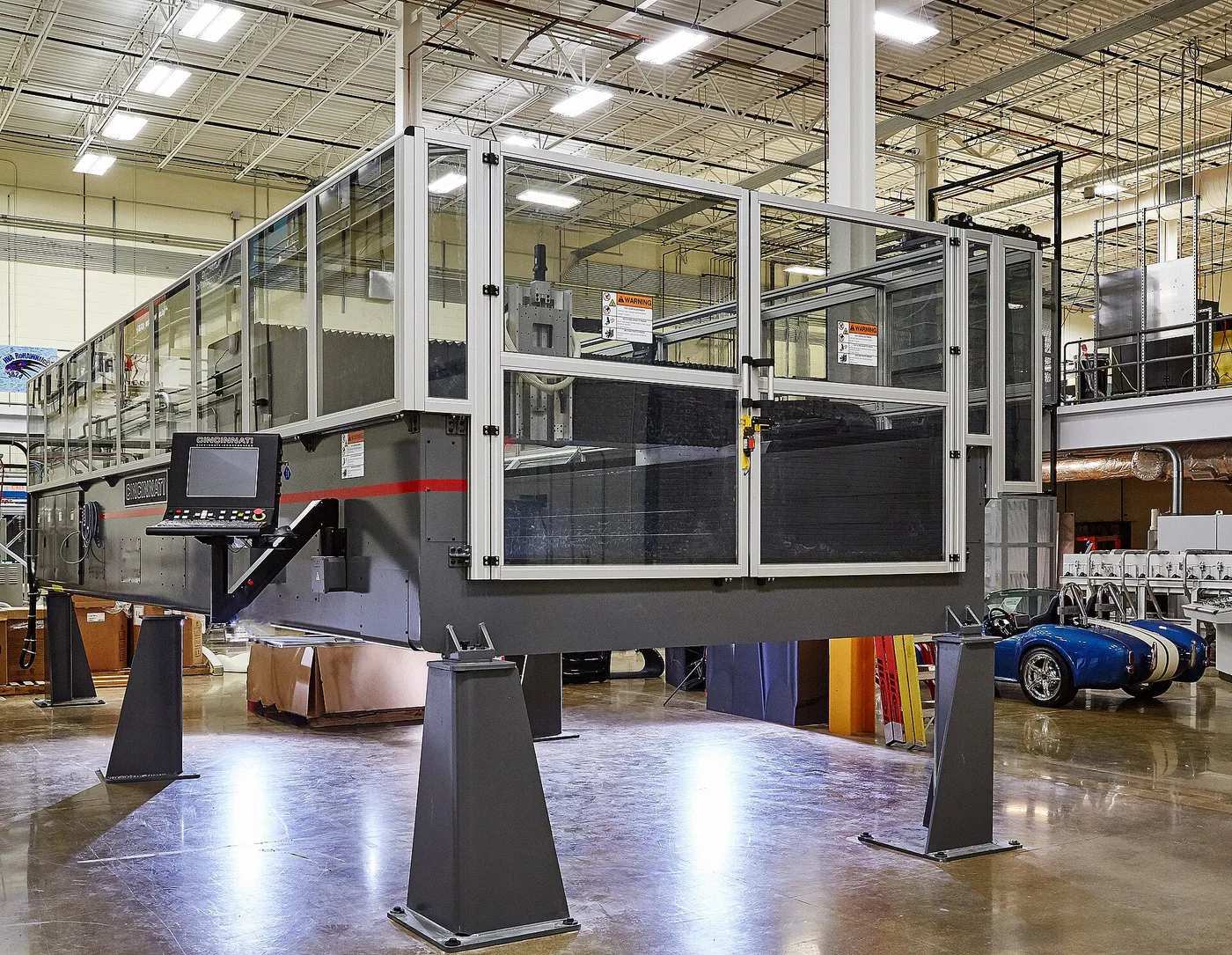
Kingston University has installed a £450,000 Rapid Fusion Zeus hybrid manufacturing cell. It links large-format pellet extrusion with robotic CNC machining so a near-net preform and tolerance-critical surfaces can be produced in one cell. The university will use it for research, industry collaboration and student training.
Why the cell is hybrid
Pellet extrusion builds large volume quickly, but surface and tolerance generally trail machining. CNC removes material only from functional surfaces. In principle this can reduce chips and cycle time compared with machining from solid stock while improving on the raw print.
Zeus adds Zivid 3D vision and Ency software integration. Vision can relate the real preform's position and geometry to the machining frame, while software supports robot and toolpath preparation. The value depends on repeatable coordinate and data transfer between processes.
Interpreting the £450,000 investment
The figure describes the installed research cell, not a universal list price for one printer. Public reporting does not split robot, extruder, spindle, vision, software, guarding, installation and training. Economic comparison also needs total cycle time, energy, labour, tool wear and scrap.
Research questions beyond a showcase part
Thermal shrinkage, interlayer bonding, residual stress and fixturing determine machining allowance on large parts. If the print moves or warps, the robot can follow the wrong surface. Qualification therefore needs reference artefacts, measurement uncertainty, tool-state tracking and repeated build-scan-machine cycles.
Education exposes students to the full chain from design to inspection. Research use, however, is not evidence of continuous industrial availability or certified series production.
Editorial conclusion
Kingston is building an integrated, measurable hybrid chain rather than buying an isolated LFAM machine. The next useful evidence is raw-versus-machined deviation, material yield, lead time and stability across repeated runs. Until published, the hybrid advantage remains an engineering hypothesis.
Sources and transparency
Trade reporting based on Kingston and Rapid Fusion releases supports the installation, value and integration partners; Kingston's official pages establish the research and education context. No independent public performance trial was available.