Validating AI-generated bone scaffolds from model to biological evidence
A risk-based plan connecting data, geometry, printing, mechanics, perfusion, sterilisation, biology and change control.
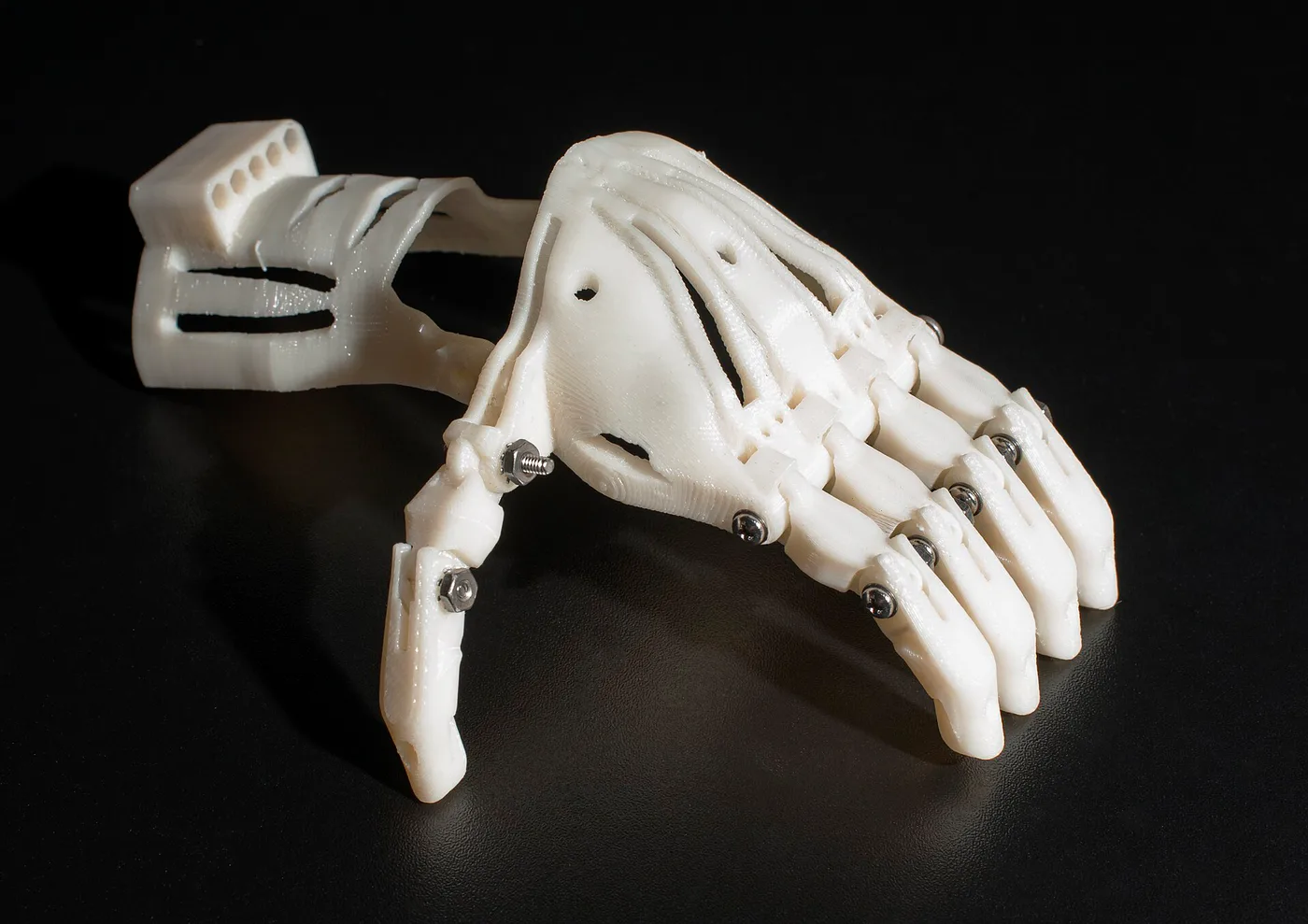
An AI-generated bone scaffold does not become manufacturable or clinically meaningful merely because a model quickly creates an attractive pore network. Validation must connect patient imaging and training data to the file, print, post-processing, mechanics, transport, biology and release in one evidence chain.
1. Fix the intended use
Define anatomical site, defect size, load, implantation duration and regenerative objective first. Cranial defects, spinal fusion and segmental long-bone repair need different acceptance ranges. Without intended use, targets for porosity, stiffness or permeability are arbitrary.
2. Validate data and model
Document CT resolution, segmentation, annotation, population, augmentation and train-validation-test separation. Patient or anatomy leakage must not enter the test set. Measure performance on out-of-distribution anatomy, rare geometry and uncertain segmentation, not only by an average score.
3. Geometry and manufacturability gate
Check watertightness, self-intersections, minimum wall and strut, overhangs, trapped powder or resin, drainage and support access. Tie voxel size to the real printer and material resolution. Configuration-control every slicer repair because it can alter pores.
4. Compare digital and physical geometry
For first articles and critical changes, use micro-CT or appropriate metrology to compare intended and manufactured geometry. Measure external fit, pore distribution, strut thickness, volumetric porosity and connectivity. Average deviation must not hide a local blockage or dangerously thin member.
5. Mechanical evidence
Beyond compressive modulus and strength, evaluate cyclic fatigue, creep, failure mode and anisotropy according to intended use. Test both coupons and full geometry because a simple specimen does not reproduce stress concentration at nodes. Hydrated, sterilised and aged conditions may need separate measurement.
6. Permeability and transport
Verify computed permeability with pressure-drop measurements using a fluid of known viscosity. The objective is not maximum flow, but a distribution supporting ingrowth and nutrient transport without dead zones or excessive shear. CFD can support release only when calibrated to physical measurements.
7. Material, cleaning and sterilisation
Metal, ceramic and polymer scaffolds need different powder, resin, binder and post-process controls. Evaluate residual powder or monomer, surface chemistry, particle release, endotoxin and sterilisation effects. Cleaning validation must target the least accessible internal pore.
8. Biological ladder
Cytotoxicity is only the first gate. Adhesion, proliferation, differentiation, inflammation, haemocompatibility and degradation depend on intended use. Animal studies need control geometry, blinded assessment, predefined endpoints and statistical power; one attractive histology image is insufficient.
9. Process capability and release
Connect model version, input, random seed, file hash, slicer profile, machine, material lot and post-process in one digital manufacturing package. Critical features need capability and measurement-system analysis. Patient-specific geometry requires both automated and human-approved release gates for every part.
10. Change control
A new model, training set, voxel size, material, printer, parameter, furnace or sterilisation route triggers reassessment. Risk determines regression testing, partial or full requalification. Predetermine rollback when geometric, mechanical or biological guardrails worsen.
Practical minimum
A credible programme includes a separate test set, printed representative geometries, micro-CT deviation, static and cyclic mechanics, perfusion measurement, cleaning and sterilisation evidence, a biological ladder and a versioned release package. Fast generation matters only if this evidence chain remains intact.
Sources
The ScaffoldForge paper supplies a concrete generative example and open code; FDA's additive-device guidance frames manufacturing and test risk, ISO 10993-1 provides risk-based biological evaluation, and ASTM F3122 underpins static and fatigue characterisation of porous additively manufactured titanium.