Three companies open shared medical AM hub in Munich
Spectroplast, MMD and FIDENTIS bring silicone, PEEK and multi-alloy dental manufacturing into shared infrastructure.
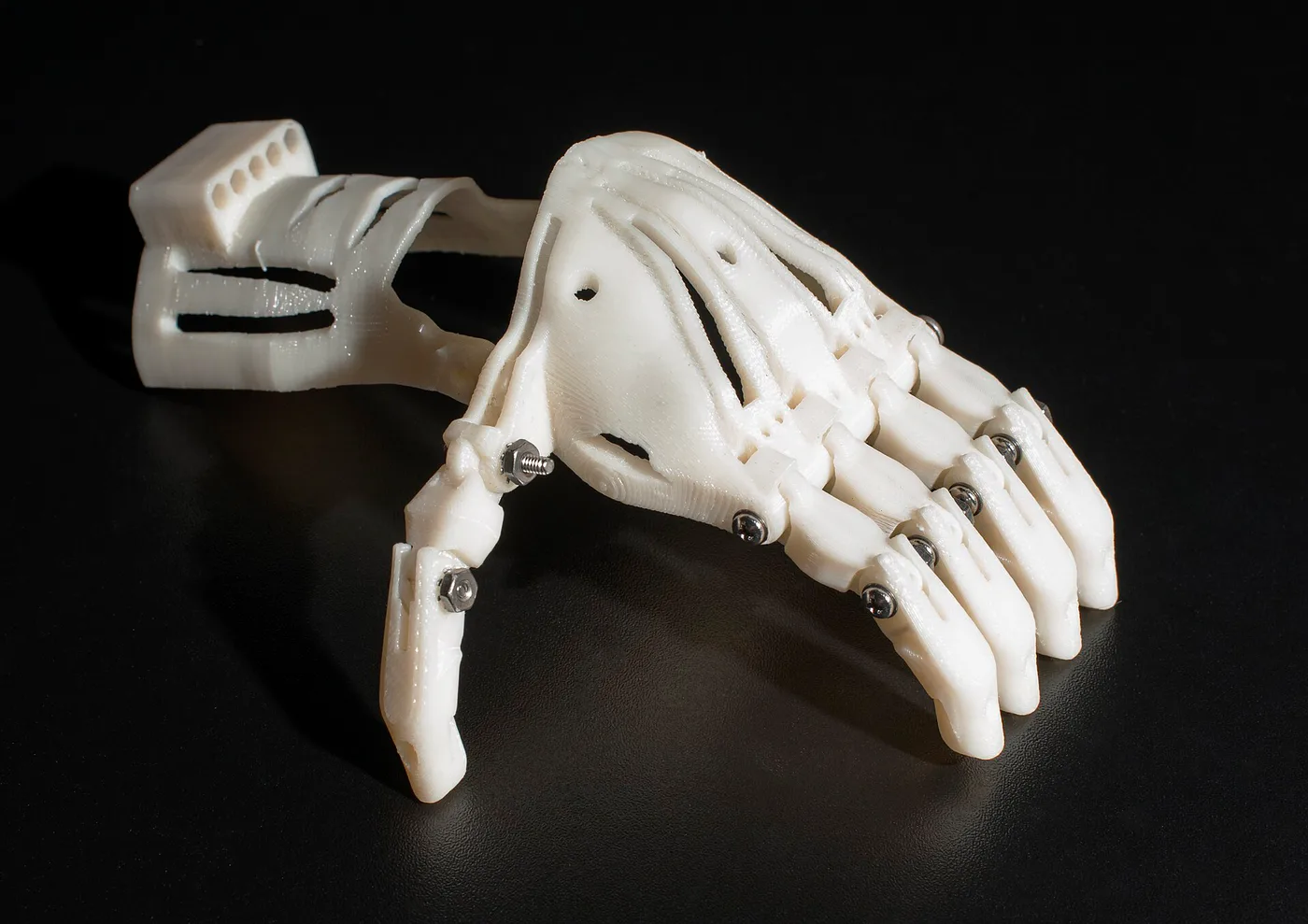
Spectroplast, Munich Medical Devices and FIDENTIS have opened shared manufacturing, laboratory and office space in Munich. The three companies bring distinct medical additive chains to one site: patient-specific silicone, porous and bioactive PEEK implants, and multi-alloy dental restorations. Shared infrastructure may reduce development and market-entry time, but it does not create shared automatic product approval.
Three technologies, different risks
Spectroplast targets flexible custom geometry with an elastomer route. Munich Medical Devices' PEEK process links porosity and bioactive surfaces with cleaning, sterilisation and biological safety. Fraunhofer IGCV spin-off FIDENTIS can place gold on cobalt-chromium through multi-material laser powder-bed processing before hybrid CAD/CAM and milling finish the dental geometry.
What can actually be shared?
Laboratory space, offices, selected metrology, procurement and regulatory expertise may be shared. Common use still needs booking, calibration ownership, cleaning status, access rights, data protection and deviation control. Equipment may be common; validated methods and release responsibility remain product-specific.
Contamination and material segregation
Silicone, PEEK, cobalt-chromium and gold bring different contamination and occupational risks. Powder and chemical zones, ventilation, sample handling, waste, cleaning and personnel flows need documented separation. A shared lab must predefine cross-contamination limits and detection methods.
Digital provenance and patient data
A patient-specific product runs from scan or clinical data through CAD, job file, machine, post-process and inspection. Version locks, approval logs and role-based access are necessary. Development files, personal clinical data and production records do not become a common asset merely because companies share a site.
What the opening proves
The centre exists and its opening hosted about 80 guests. That is a site milestone, not a disclosed capacity, validated product count, regulatory authorisation or measured lead-time reduction. FIDENTIS statements about twentyfold speed and complete automation remain vendor claims without an application baseline.
Which KPIs show success?
Useful measures are development lead time, first-pass lot acceptance, validation repeats, equipment utilisation, deviation closure, approved products and total market-entry cost. Track them by technology and shared service so one strong chain cannot conceal another's weakness.
Regulatory boundary
Opening a facility does not establish MDR conformity, CE marking, sterilisation validation or dental authorisation. Intended use, risk management, material and process validation, biological evaluation, traceability and post-market surveillance remain product-specific. Exact obligations depend on classification and market.
Editorial conclusion
The hub's real advantage may be a shorter feedback loop among material, machine, laboratory and regulatory specialists. It scales only if shared resources do not obscure accountability for each product, dataset, calibration and release decision.
Sources and transparency
TCT reports the site and company roles; FIDENTIS and Spectroplast provide primary technology background. The opening announcement supplies no independent clinical, economic or regulatory outcome dataset.