3D-printed formwork targets two-week delivery for nuclear construction
ORNL and partners demonstrated full-scale composite forms; the CAMX award is professional recognition, not regulatory approval.
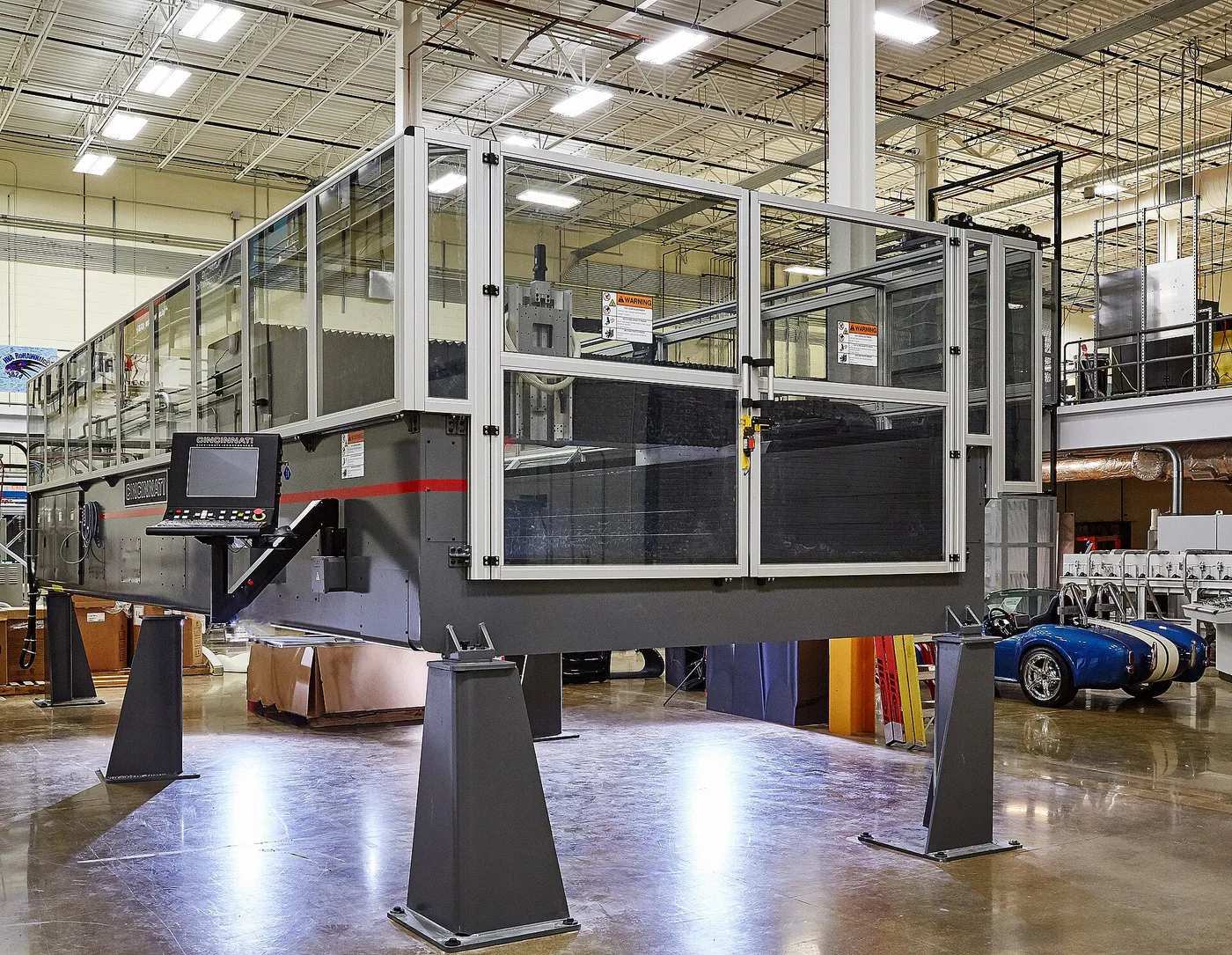
Oak Ridge National Laboratory and partners have received the 2026 CAMX Combined Strength Award for large-format additively manufactured composite forms intended to accelerate complex nuclear concrete construction. ORNL's 14 October release says the digital route can move from design to delivered form in about two weeks, compared with as much as six months for conventional steel tooling.
The award and full-scale demonstration are verified. Two weeks versus six months is the project team's comparison, not an independent average for every geometry. No complete cost, cycle-life or durability dataset is public, so the schedule claim should not be converted into a universal return-on-investment claim.
What the team manufactured
The team printed reusable fibre-reinforced polymer-composite forms and machined critical surfaces. The route targets shapes that are difficult or slow with conventional formwork, including interlocking radiation-shielding concrete panels designed for grout-free assembly.
ORNL reports one-sixteenth-inch, roughly 1.6 mm, precision on critical surfaces while the forms withstood fresh-concrete pressure. In a demonstration at Kairos Power's Oak Ridge campus, each concrete section measured 10 by 10 feet, about 3 by 3 metres, and three sections were stacked into a column.
Why the manufacturing–construction feedback loop matters
Barnard Construction did more than receive the tooling. It implemented and adapted the printed forms, returning live feedback on constructability. A shape can print successfully yet remain difficult to lift, seal, brace, strip or reuse on site.
This makes the programme more than a large-printer showcase. It connects composite material, extrusion, machining, metrology, concrete placement and reuse. The consortium includes ORNL, DOE AMMTO, the University of Maine, Kairos Power, Barnard Construction, Airtech, JuggerBot, Additive Engineering Solutions, Haddy and Tru-Design.
What the CAMX award does not prove
The award is professional recognition, not a nuclear regulator's approval. It does not automatically qualify a reactor building, establish unlimited reuse or prove lower whole-project cost. Concrete quality, joints, reinforcement, embedded features, shielding performance and inspection records remain separate evidence packages.
The forms are precursors to solutions planned for Kairos Power's Hermes low-power demonstration reactor. That signals a near-term industrial route, but ORNL does not describe every demonstrated section as a final licensed building element.
Where the economics may work
Digital formwork is strongest when geometry is complex, steel-tool lead time blocks the programme or designs still iterate. Simple repeated planar forms may remain cheaper and more durable conventionally. Decisions need material, machining, bracing, transport, cleaning and scrap costs plus a verified reuse count—not print time alone.
Editorial conclusion
The most important evidence is a full-scale construction demonstration with two-way feedback. Additive manufacturing does not print the nuclear concrete structure here; it makes rapidly changeable production tooling. The next strong proof will be cycle count, dimensional retention, whole cost and licensing documentation from forms used in actual Hermes construction.
Sources
- ORNL: 3D-printed forms speed nuclear construction, earn CAMX Award — primary institutional release, 14 October 2026.
- ORNL Manufacturing Demonstration Facility 2025 Impact Report — programme and demonstration background.