Raise3D closes $15m round and launches two large-format FFF systems
T450 provides 63 litres and T700 350 litres; 600 mm/s and 80 mm³/s are peak or narrow test figures, not full-cycle throughput.
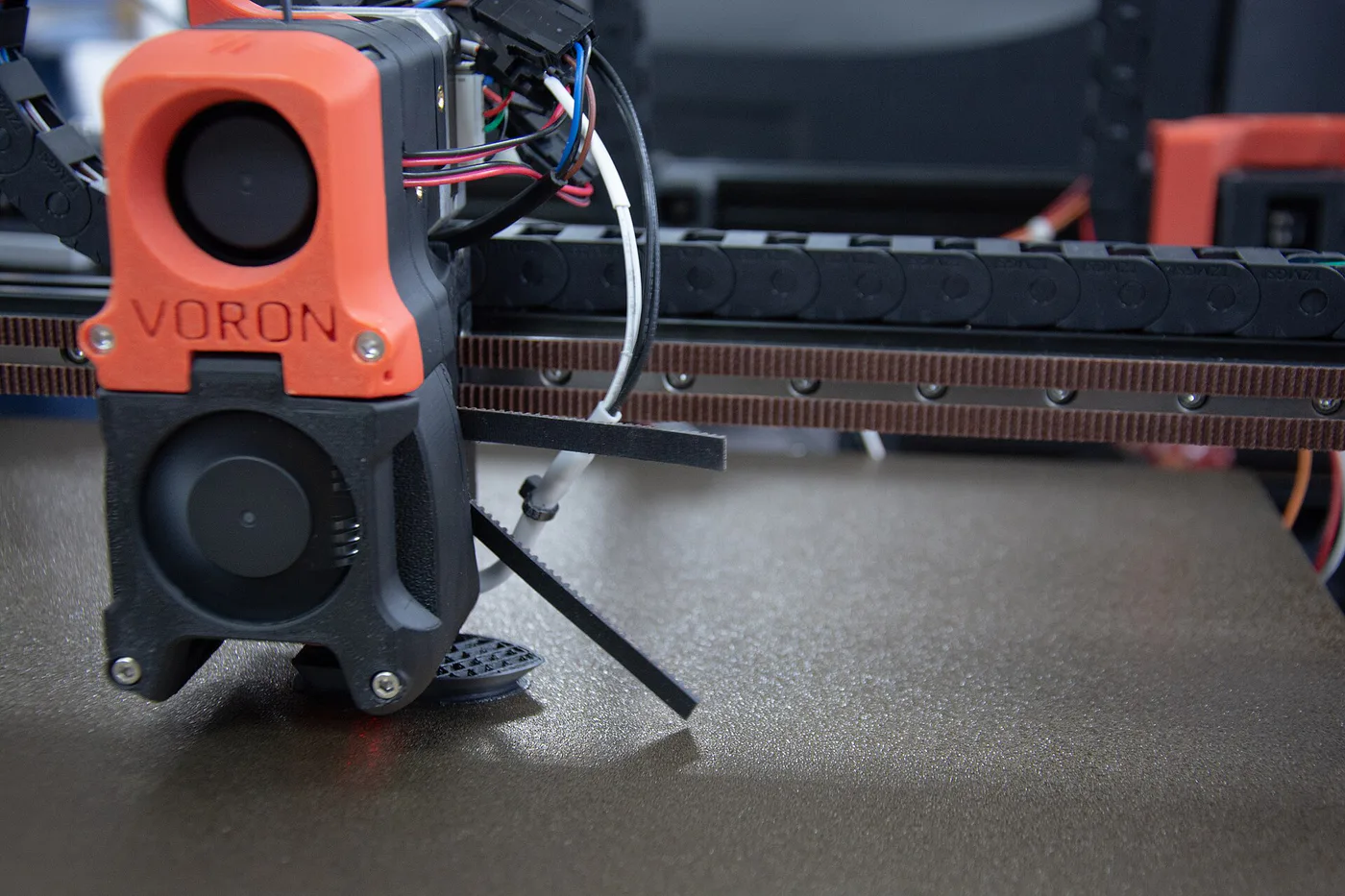
Raise3D announced a $15 million C2+ funding round and two enclosed industrial FFF systems on 10 November. The T450 offers a 450 × 350 × 400 millimetre build volume; the T700 offers 700 × 500 × 1,000 millimetres. The company intends to use the capital for product development and market expansion. The financing and product announcements are verified corporate events, while productivity and customer outcomes remain vendor claims rather than independent audits.
Two different size classes
T450 has a nominal 63-litre build volume, 70°C chamber, 420°C nozzle and 120°C bed. Its announced list price is $4,999 or €4,999 and the standard nozzle is 0.4 millimetres. T700 provides 350 litres, a 60°C chamber, the same nozzle and bed limits, a 0.6-millimetre standard nozzle and a $15,999 or €15,999 price. Its one-metre Z range may suit tools, fixtures and tall one-off parts, but long builds increase interruption exposure.
TwinFlow and the 80 mm³/s claim
Both machines use a 4MD CoreXY motion system and TwinFlow extruder. Two filament paths feed one nozzle: with one material they target higher flow; with different materials they enable sequential dual-material printing. The stated maximum travel or print figure is 600 mm/s. Raise3D quotes 80 mm³/s on T450 using Hyper Speed ABS V2 at 250°C, a 0.4-millimetre nozzle and a smooth single-wall segment. That is a narrow test condition, not average throughput for a complete part.
The nozzle combines a CuCrZr body with a silicon-carbide tip. The material list includes ABS, ASA, TPU, PET-CF, PPA-CF and PPS-CF. Compatibility is not a qualified process. Drying, wear, chamber balance, interlayer strength, warping and emissions controls still need material-specific evidence.
Monitoring and process safety
The company lists AI spaghetti, flow and nozzle-clump monitoring, runout detection, a camera, power-loss recovery, RFID and mesh levelling. These may be useful fault detectors, but they do not by themselves establish closed-loop quality control. Relevant measures are true detection rate, false alarms, recoverable builds and conforming released parts.
Customer example and adjacent updates
Raise3D cites a CATL manufacturing tool whose lead time allegedly fell from 40 to 10 days and mass from 8 to 2 kilograms. This is a supplier case without a public method or independent cost audit. The announcement also covers a software-only RMS220 Z extension from 350 to 450 millimetres and a B520 automatic blaster with 24.8- and 75.5-litre baskets for SLS, MJF, SAF and HSS parts.
Editorial conclusion
T450 and T700 target an aggressive price-to-volume position, but industrial value will not be decided by nominal speed. The key metric is conforming-part lead time across preparation, heating, printing, cooling, support removal, inspection and scrap. The funding may support the ramp; the next evidence should be shipped machines, stable profiles, service capacity and repeatable parts across multiple lots.
Sources and evidence boundary
Raise3D's release is the primary source for funding, specifications, prices and examples. The company supplied the figures; the announcement does not include an independent machine test, order backlog or audited customer dataset.