Randomized trial tests the 3D-printed Breast Cancer Locator
Positive margins were 14.4% with BCL and 21.1% with wire localization in the 418-patient study.
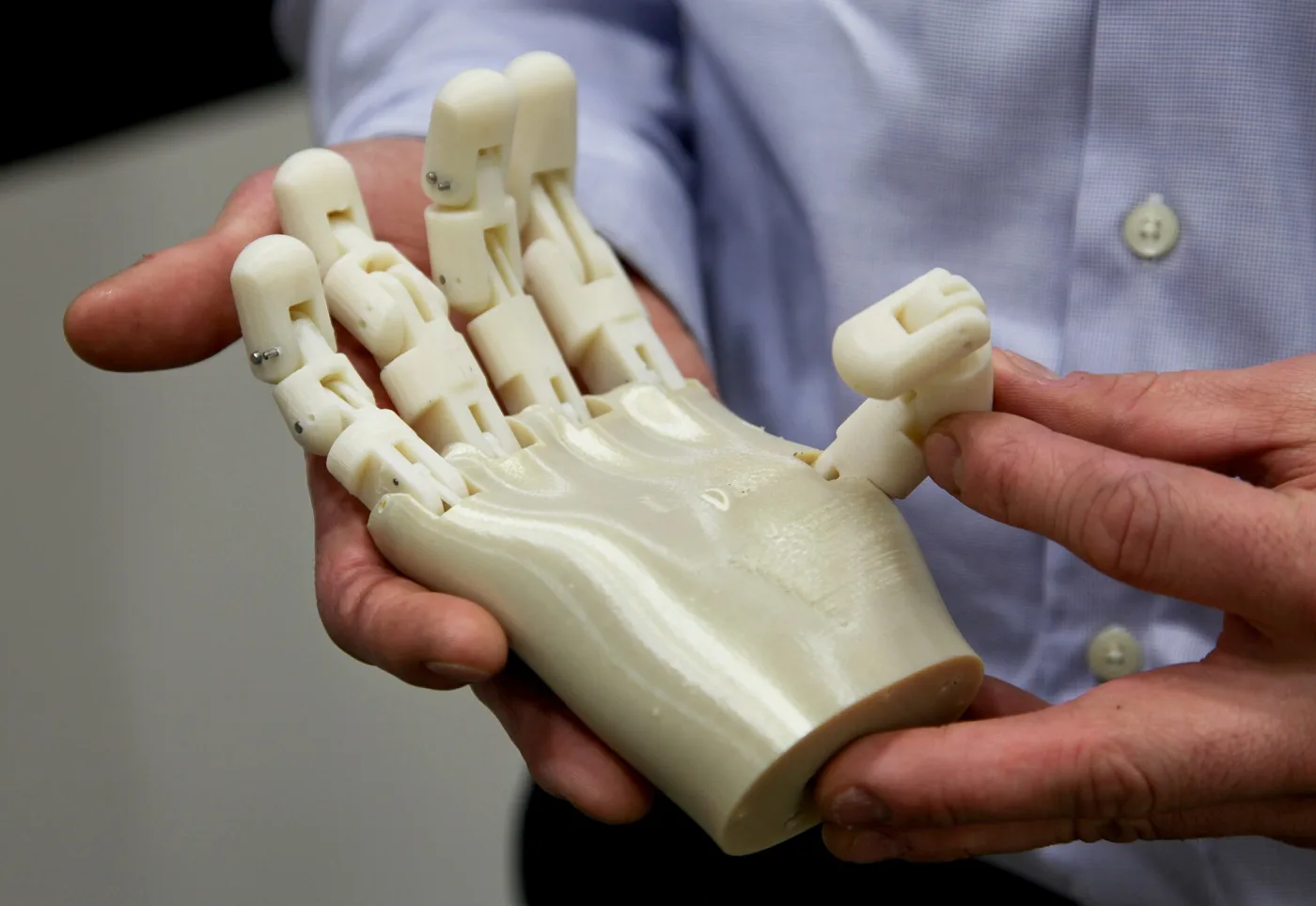
A 23-site international randomized phase III trial involving 418 patients compared Cairn Surgical's patient-specific, 3D-printed Breast Cancer Locator with conventional wire localization for non-palpable breast cancer. Positive surgical margins occurred in 14.4% of the BCL group and 21.1% of the wire group.
How the system works
The BCL uses supine MRI data to create a patient-specific template that fits the breast surface. Multiple spatial reference points are intended to translate tumour extent into the operating room. The printed template does not decide resection volume; it is one component in an imaging, planning and clinical chain.
What the randomized trial found
For the primary analysis, BCL met the non-inferiority criterion for positive margins (p=.011). The superiority p-value was .025, narrowly missing the prespecified .023 threshold. A final analysis stratified by tumour type returned p=.019. Re-excision was 12.9% with BCL and 19.6% with wire localization.
Why the threshold must be reported precisely
The difference between 14.4% and 21.1% is clinically interesting, but the prespecified analysis governs the statistical claim. The study should not be described as unqualified superiority. Non-inferiority is supported; superiority is an analysis-dependent signal requiring confirmation.
Limitations and regulatory status
The paper reports funding and conflict relationships involving the developer, making replication and independent assessment important. The product remains investigational in the United States; a clinical publication is not general marketing authorization. Accuracy depends jointly on MRI timing, segmentation, file conversion, fit and surgical use.
Editorial conclusion
This trial provides unusually high-level evidence for a patient-specific printed surgical aid. The next decisive questions are site-to-site variation, planning errors, total lead time, cost and whether routine deployment preserves the result.
Sources and transparency
The primary source is the peer-reviewed Annals of Surgical Oncology paper published 22 October 2026 and its PubMed record. Product workflow details come from a secondary specialist source; clinical figures are reported only from the study.