Fraunhofer package smooths voxel steps and accelerates metal-AM distortion simulation
Shape Dithering applies geometric blue noise while RISTRA-AM runs inherent-strain simulation on GPUs.
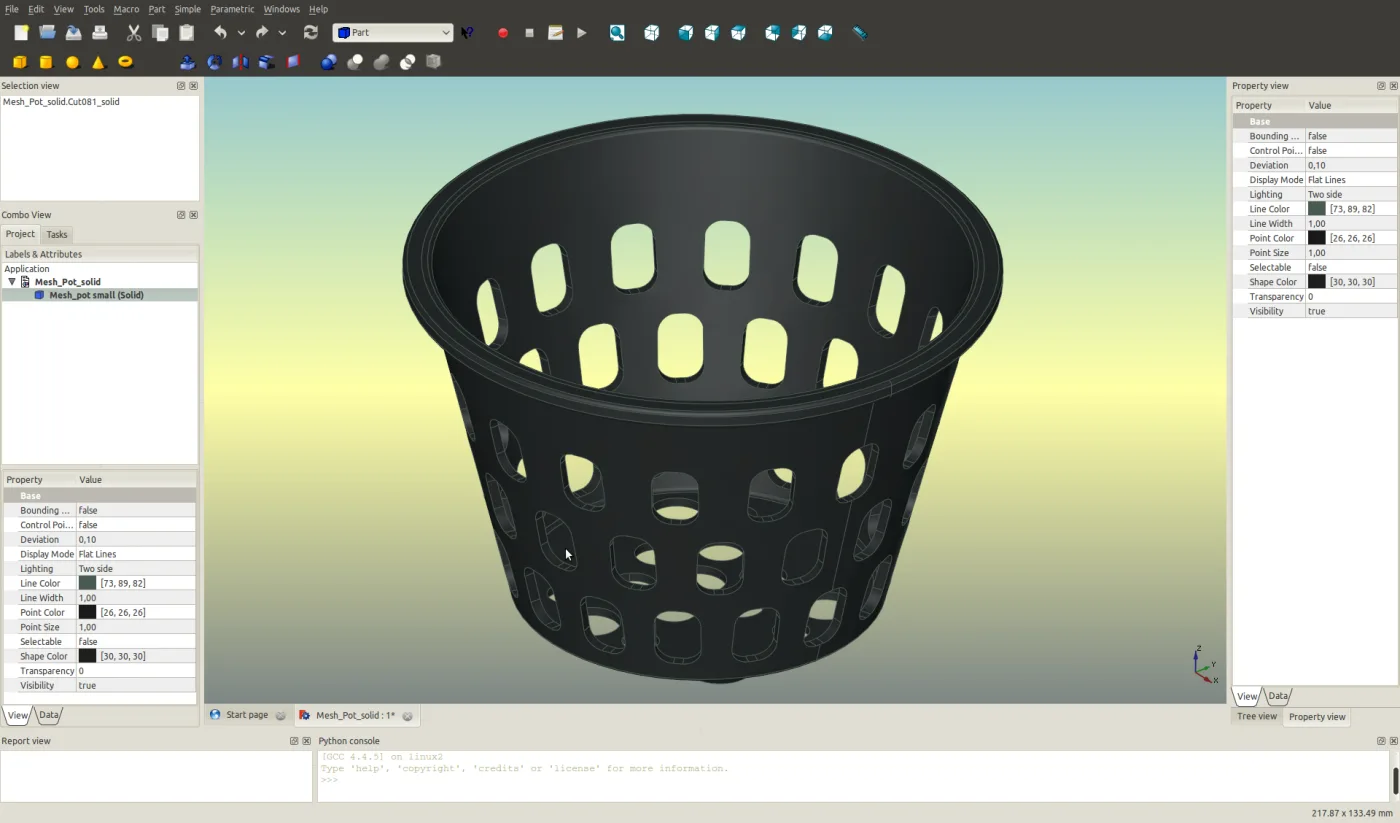
Fraunhofer IGD will present voxel-surface Shape Dithering, ITWM-assisted unit-cell design and RISTRA-AM metal-build distortion simulation in one Formnext 2026 workflow. Shape Dithering research was published in 2022; the current development is its industrial software and trade-show integration, not invention of an entirely new algorithm.
What Shape Dithering does
Discrete voxels create steps on slopes and curves. The method applies a resolution-adapted high-frequency blue-noise signal to a signed distance field, turning large periodic steps into a finer, less structured distribution. Fraunhofer describes it as parameter-free and purely geometric.
It does not increase physical printer resolution or improve every dimension automatically. Visual smoothness, shape error and functional tolerance need separate measurement; on thin walls and fits, dither can create local excess or missing material.
Unit cells and RISTRA-AM
IGD and ITWM link unit-cell design, numerical evaluation and manufacturing preparation. RISTRA-AM uses inherent strain to estimate distortion and residual-stress effects in metal powder-bed fusion. The release claims 10–100× GPU acceleration; the product page says up to 80× compared with CPUs.
That range shows dependence on model, mesh, hardware and problem. Without a common public benchmark, no fixed 80× or 100× result should be promised. Inherent-strain simulation is fast but needs calibration coupons and measured distortion.
Measuring industrial value
Shape Dithering should compare original and modified surfaces on the same machine, material and orientation using profilometry, optical or CT inspection, dimensional error and functional tests. RISTRA-AM needs runtime, memory, distortion error and support-strategy effects across geometries, validated by independent builds.
Verified fact, institutional claim and conclusion
The publication, Formnext demonstration and software functions are traceable to institutional sources. Acceleration figures are Fraunhofer claims without disclosed benchmark scope. Our conclusion is that the package matters by connecting geometric surface treatment, material-structure design and process distortion in one decision chain; industrial acceptance still requires uncertainty and machine-specific calibration.
Sources
The lead source is Fraunhofer IGD's 12 November 2026 Formnext release. Its 2022 institutional report, the ACM Transactions on Graphics paper and the official RISTRA-AM page provide methodological background.