GKN Aerospace earns first Nadcap accreditation for laser wire DED
The audit covers site process control, people, equipment and traceability; it does not approve every finished part.
The site process was accredited, not every part
GKN Aerospace said on 29 October 2026 that it had become the first company to obtain Nadcap accreditation for laser wire directed energy deposition, or L-DED-w. According to GKN, the audit covered process controls, procedures, personnel qualification, equipment, material control and traceability.
The distinction is essential: Nadcap audits organizational and technical control of a special process. It does not automatically grant type or customer approval to every geometry, alloy or aircraft component.
What does the 'world first' claim mean?
The world-first wording comes from GKN's corporate release and applies to the specific L-DED-w Nadcap scope. PRI's official AM programme places DED under AC7131/2. Accreditations have existed for other AM technologies and quality systems, so this is not a general claim to be the first additive manufacturer.
Why is wire DED a special process?
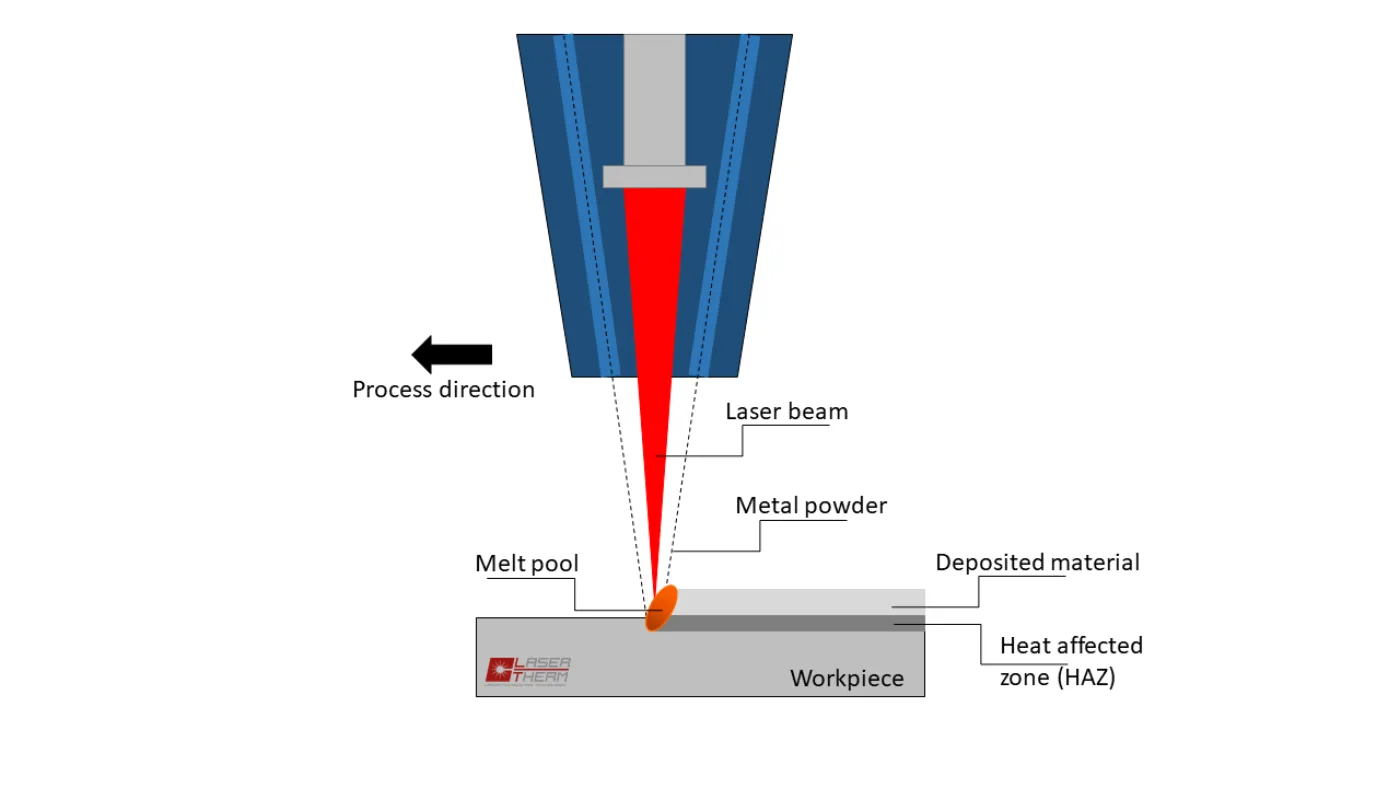
In L-DED-w, wire, laser, feed, motion path, shielding gas, heat accumulation and interlayer state jointly form the deposit. Machining often creates final dimensions, while heat treatment and inspection establish properties. Final inspection alone cannot reconstruct whether the complete build history was controlled.
Nadcap therefore expects process evidence: approved procedure, equipment state, calibration, material lot, operator authorization, digital file and deviation control form one production record.
The expected audit evidence chain
Requirements and digital package
PRI lists poor flowdown of customer requirements, digital-file and software control, and customer approval of the AM machine among industry challenges. The manufacturer must preserve an immutable link from drawing and material requirement to toolpath, parameter revision and machine log.
Equipment and measurement
Calibration of laser power, focus, wire feed, machine or robot kinematics, gas flow and temperature sensing is meaningful only when limits and expiry are tied to the job. A build made with an expired instrument needs a predefined deviation route before any retrospective acceptance.
Wire, gas and traceability
Wire alloy, diameter, surface, lot and storage, plus gas quality and supply state, can affect the melt and defect population. Returning residual material, changing spools and switching lots cannot be informal workshop decisions.
People and execution
Operator, programmer, inspector and approver competencies differ. Training must establish task authorization, periodic renewal and handling of abnormal conditions, not merely attendance.
Connection to Trollhättan industrialization
GKN has built a central additive capability in Trollhättan and previously announced a SEK600 million investment there. Nadcap fits the move from development deposition to a repeatable, customer-auditable production system.
GKN also says it has designed and delivered fully certified AM components that are in flight. The release does not establish that all those parts used L-DED-w within the current audit scope.
What is still required for a flying part?
A specific part still needs design approval, material and process qualification, representative coupons or witness pieces, NDT, heat treatment, machining, property data and customer acceptance. Regulatory compliance is a separate gate for safety-critical use.
Accreditation may reduce duplicate customer audits and strengthen supplier confidence, but it cannot replace part qualification without evidence. Process accreditation and product approval should remain separate records.
Which results would demonstrate successful industrialization?
Useful next milestones include the number of approved L-DED-w part families, first-pass build yield, wire and energy use, machining allowance, rework or scrap, total lead time and audit-finding trends. GKN has not yet disclosed them in this release.
Editorial conclusion
The accreditation is a meaningful, verifiable industrialization gate: external audit links digital file, machine, material, people and traceability. Its value will be determined not by the 'world first' label alone but by how many L-DED-w applications reach stable, customer-approved serial production. PRI confirms the audit framework; GKN remains the only direct source for commercial and production outcomes.