Lithoz Performance Pack brings 25 µm pixels to CeraFab S65
The optical upgrade targets a smaller pixel and twice the light intensity; sintered-part accuracy still needs separate proof.
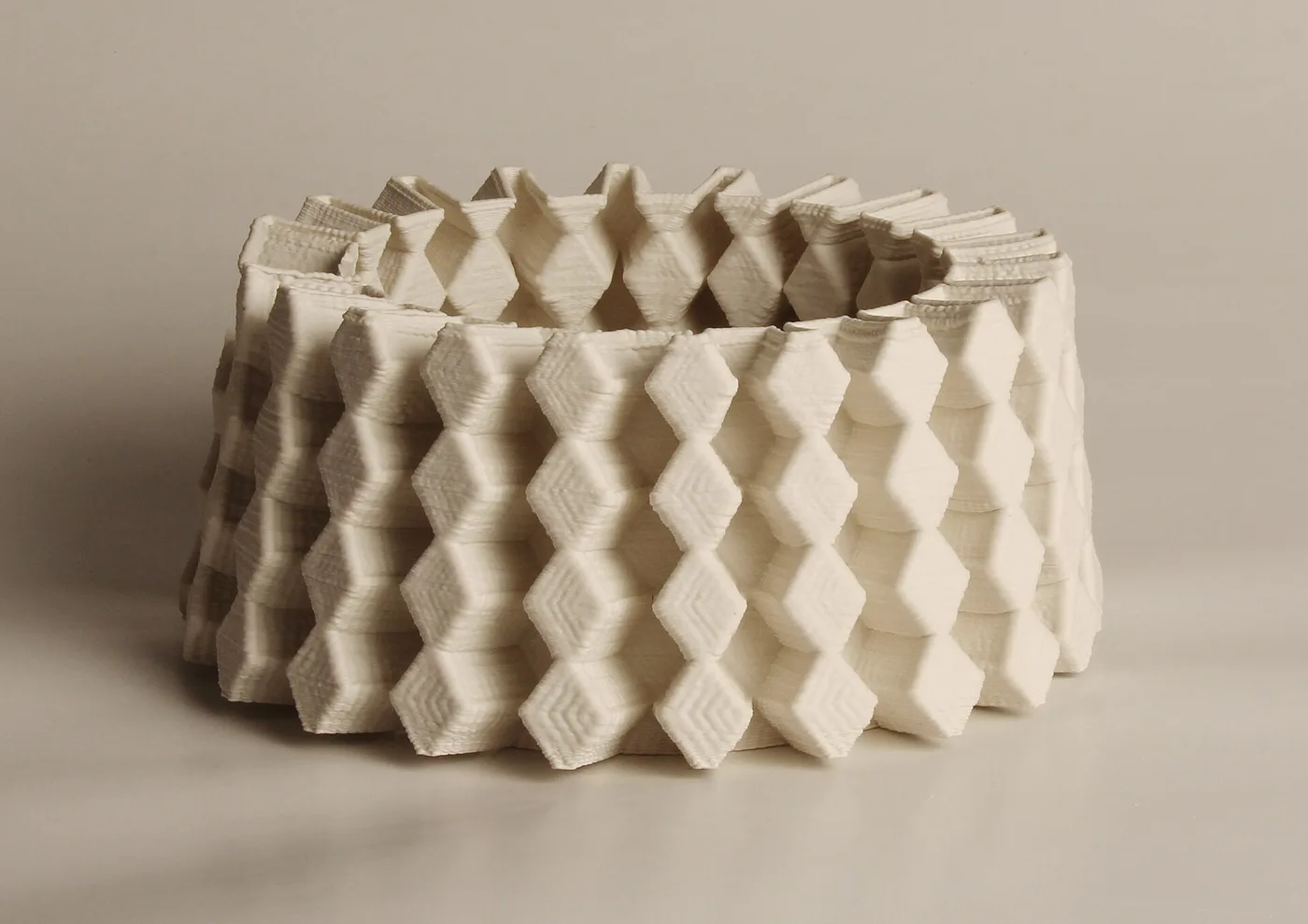
Lithoz has announced an optical upgrade called the Performance Pack for CeraFab System S65 and S65 Medical ceramic-VPP machines. The company says projected pixel size changes from 40 to 25 micrometres, nominal resolution from 635 to 1,016 dpi, and light intensity from about 60 to 120 mW/cm². The package is scheduled for demonstration at Formnext 2026.
Resolution is not accuracy
A smaller projected pixel enables a finer digital pattern, but it does not establish 25-micrometre finished-part accuracy. Light scatters in ceramic slurry, layers can over-cure, green parts can be damaged during cleaning, and debinding and sintering introduce shrinkage and distortion. Finished capability requires separate geometric coupons.
Why higher intensity matters
Lithoz links roughly doubled intensity especially to dark or highly absorbing ceramics. Intensity is not dose by itself: exposure time jointly defines delivered energy. Working curves, cure depth and lateral growth must be remeasured for each material. Directly transferring the old recipe may over- or under-cure layers.
Machines and scope
TCT identifies the S65 and S65 Medical, while Formnext's exhibitor page also mentions Multi 2M30 support. Public information does not state installation price, cycle time, full material list, any build-area change or independent capability study. Compatibility should therefore be checked by configuration.
Acceptance plan
Before upgrading, record current projector uniformity, exposure window, wall and hole error, finish and scrap. With the new optics, run a dose matrix, field-position coupons, thin walls, gaps, holes and stepped geometry from the same material lot. Measure green and sintered dimensions separately, and change sintering compensation only after the new data exists.
What the announcement proves
The product, stated optical parameters and planned Formnext demonstration are established. Better detail, faster exposure and the processability of new dark materials remain vendor performance claims; no standardised public comparison dataset is available.
Editorial conclusion
The potential value is a wider optical process window, not one dpi number. Procurement should depend on sintered geometry, properties, cycle time and yield with the buyer's material. A smaller pixel matters only if the thermal chain preserves the detail.
Sources and transparency
Technical figures come from TCT's report dated 28 October 2026 and Formnext's official exhibitor page. Product and performance data originate with the manufacturer; no independent comparative test is public.