Rolls-Royce orders an RPD titanium structural development part
Norsk Titanium will build the Ti-6Al-4V preform in Norway and machine it in Germany; the development order is not serial approval.
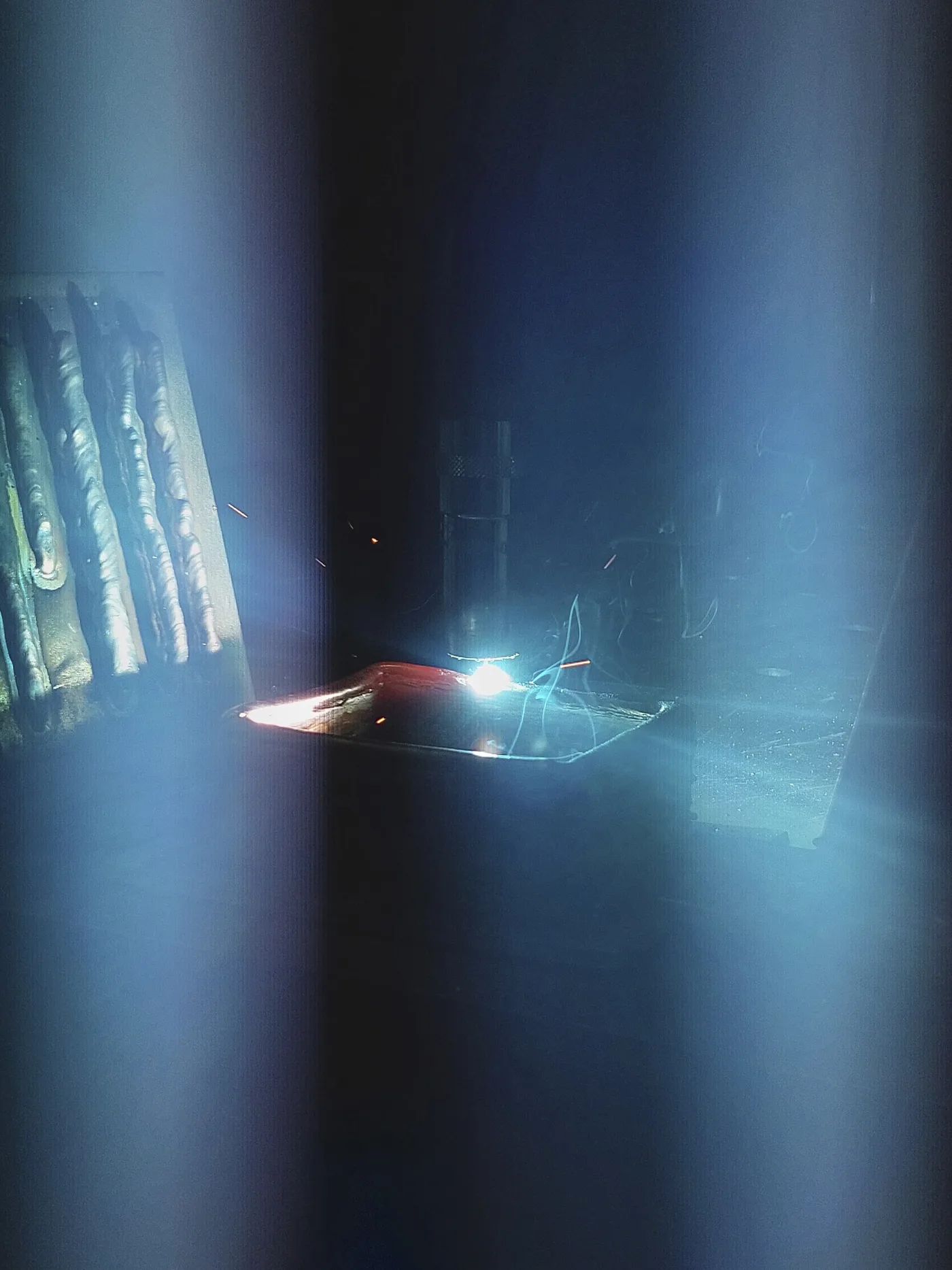
Rolls-Royce ordered a development Ti-6Al-4V structural preform from Norsk Titanium. The Norwegian company will deposit the near-net shape with Rapid Plasma Deposition and machine it in Plankstadt, Germany. The order matters because an aero-engine manufacturer is evaluating wire DED as an alternative to forged or billet-machined titanium. The public announcement remains a development order: it names no serial programme, quantity, flight approval or flown part.
How RPD works
Norsk Titanium's RPD melts titanium wire with a plasma arc and deposits it layer by layer on a substrate. The objective is a preform closer to final geometry, followed by machining of critical surfaces and tolerances. Wire can be cleaner and simpler to handle than fine powder, but the process still creates welding-like thermal cycles, texture, residual stress and anisotropy.
The economic proposition is a lower buy-to-fly ratio: less expensive titanium removed than from billet or a large forging. The actual benefit depends on deposited mass, final mass, machining time, scrap and qualification cost for the geometry. The public order gives none of those numbers.
Two sites, one evidence chain
Deposition in Norway and machining in Germany create a logistics and quality interface. Digital model, build program, wire lot, substrate, build log, heat treatment, NDT, transport protection, datum setup and machining inspection should meet in one dossier. A shifted preform reference can require more allowance or create scrap downstream.
The German operation is therefore more than commodity machining. Near-net advantage survives only if deposition variation and machining allowance are controlled together. The sources do not publish the full measurement-system or site-interface record.
Evidence for a structural titanium part
Beyond chemistry and density, the programme may need alpha-beta microstructure, grain orientation, internal fusion flaws, surface cracking, residual stress and oxygen/hydrogen control. Mechanical testing must represent build and load directions, final heat treatment and surface. Static tensile results do not replace fatigue, fracture toughness or damage tolerance when the application requires them.
Dimensional control must connect pre-machined and final states. Too little allowance risks break-through; too much destroys the economic gain. Critical characteristics need multiple builds, wire lots and process-window edges rather than one attractive specimen.
What the Rolls-Royce order means
A development purchase order shows that the customer wants data on a concrete part and that the supplier entered an evaluation. It does not show general process approval, flight eligibility or a future production award. A successful first article, material/process approval, part qualification or follow-on order would be separate milestones.
Editorial conclusion
The project demonstrates a realistic DED role: not printing a final surface in one step, but reducing feedstock and machining through a near-net preform. The order is an industrial signal; success will be measured by final properties, yield, documented cost and approval. Until then it is a development programme, not a serial-production breakthrough.
Sources and transparency
TCT Magazine is the lead source for the order, based on Norsk Titanium's announcement. Norsk Titanium's technology page is the primary background for RPD. The public sources disclose no quantity, price, part identity, qualification result or flight approval, and this article treats them as open questions.