Hi3D V1.0 opens 1536³ geometry refinement code
The image-and-coarse-mesh model ships code and weights; metrological accuracy and print readiness still require separate proof.
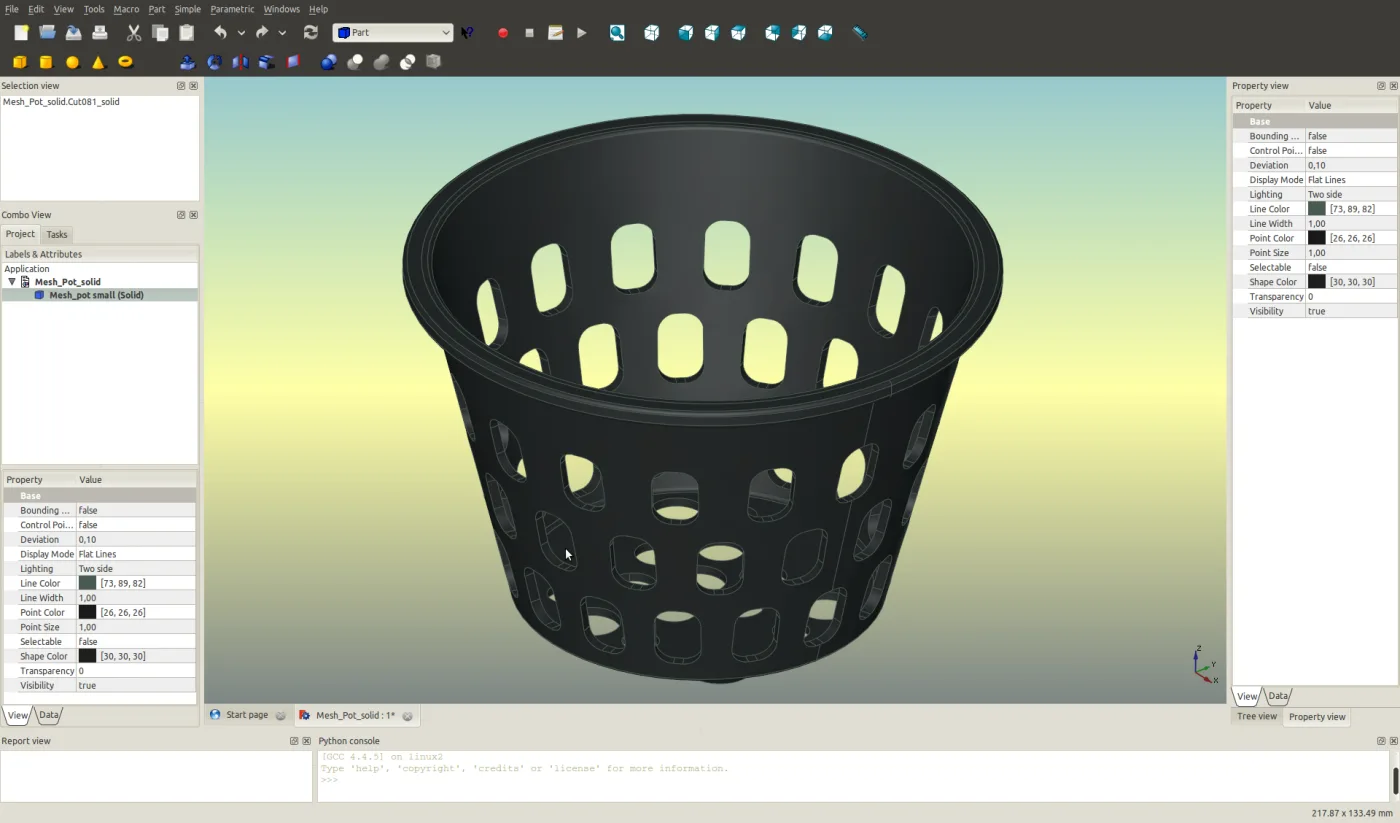
The Hi3D team released inference code and model files for Hi3D V1.0 on 23 October 2026. It is not a complete single-image 3D generator: it takes a reference image and an existing coarse triangle mesh, then refines that geometry. This distinction matters because output credibility already depends on the relationship between the input shape and view.
Geometry detail rises in three stages
The project describes a sparse spatial grid refined through effective resolutions of 512³, 1024³ and 1536³. Its developers cite roughly two million curated 3D assets for training. A large grid does not automatically mean equivalent dimensional accuracy: resolution describes representation density, not a known tolerance in millimetres.
What was actually released?
GitHub provides inference code and instructions, while Hugging Face hosts model files. The documented environment is Linux, Python 3.10, NVIDIA compute capability 8.0 or newer, and CUDA 12–12.5. Measurements used an H20 96 GB accelerator; no CPU path, consumer-GPU memory envelope or official Windows route is documented. Training code and the full evaluation harness are absent.
Geometry is not a manufacturing model
V1.0 refines geometry but does not create verified texture, material identity, colour or manufacturing metadata. Processing uses a normalised unit scale, so original world coordinates and nominal dimensions must be preserved separately. A single view cannot measure hidden surfaces; the model may infer a plausible back side rather than reconstruct an observed one.
Reading the reported results
The project page compares geometric metrics with other methods, but the public package lacks the complete test set, evaluation program and every preprocessing parameter. These are developer results, not independent benchmarks. Reproduction needs identical coarse meshes, cameras, masks, seeds, model versions and post-processing.
The open licence has a commercial threshold
Hi3D Open License 1.0 permits research and commercial use with attribution conditions. Above 200,000 monthly active users or US$1 million in monthly revenue, it requires notice and a separate agreement. It is not an unconditional permissive licence; integration should review how code, weights, derivatives and hosted services fall within its scope.
A practical verification plan
Test an object with known dimensions and measurements from several directions. Align the coarse mesh, refined mesh and reference geometry in one coordinate frame, then measure surface deviation, holes, walls, radii, manifold state and slicable volume. Treat hidden surfaces as a separate error population instead of concealing them within a visible-side average.
Editorial conclusion
Hi3D V1.0 is a meaningful open research release because it provides runnable code and weights for high-detail mesh refinement. It does not establish metrological reconstruction or direct print readiness. Plausibility may suffice for visual content; fitting, loaded or regulated parts still need measured references, scale recovery and physical acceptance.
Sources and transparency
Hi3D's GitHub and Hugging Face pages establish release state, environment and licence. Dataset size, hardware measurements and comparison results are developer claims; the project does not yet provide independent reproduction or manufacturing-accuracy testing.