Pollen AM and RHEON print a 30% lighter helmet insert from pellets
P3D 001 was tuned for Pam Pro and compared with a moulded reference, but the complete raw impact dataset is not public.
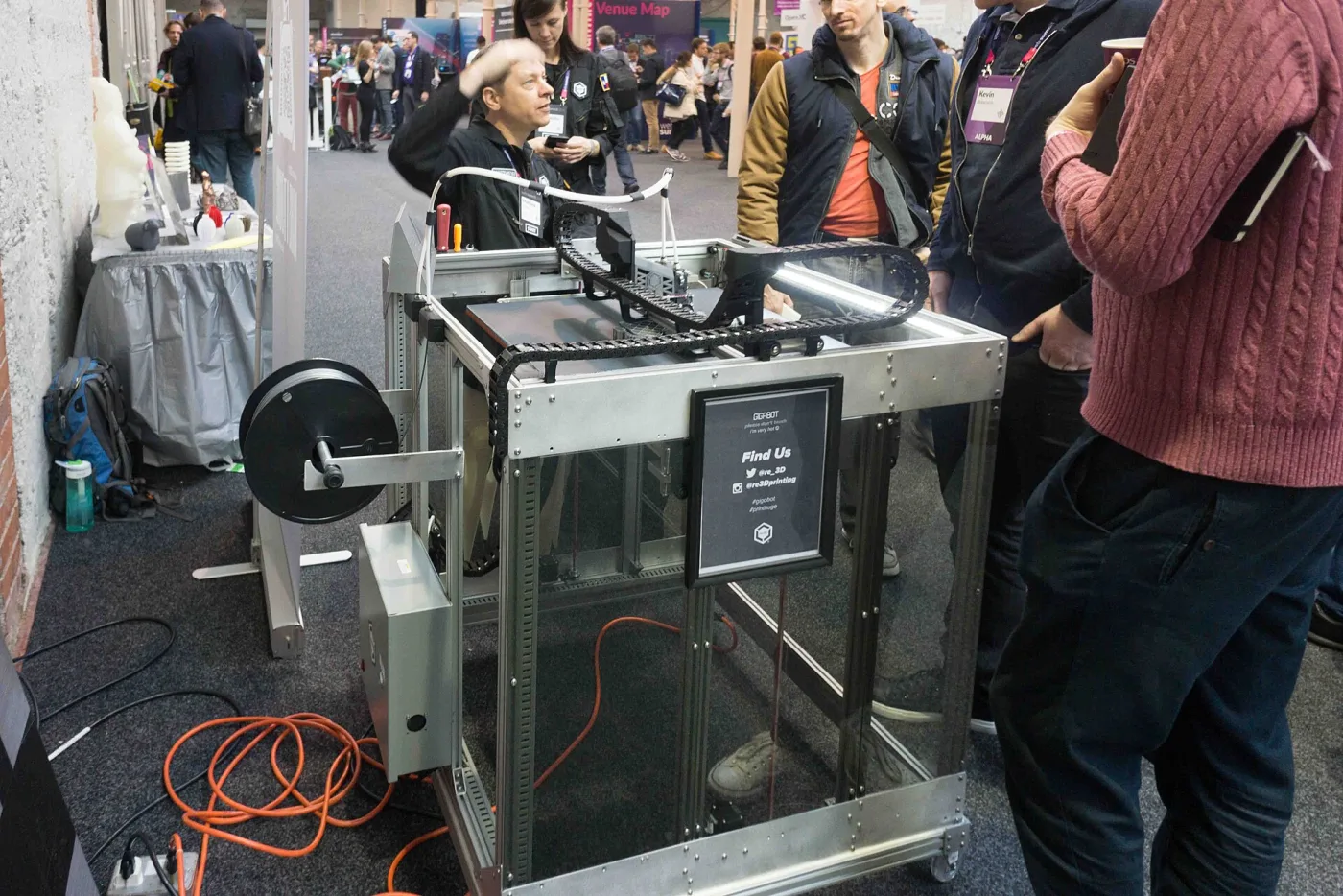
Pollen AM and RHEON Labs qualified P3D 001 impact-damping pellets on the Pam Pro additive platform and printed an internal component that fits a Xenith Shadow XR American-football helmet. The partners say the printed part is 30% lighter than a moulded counterpart of similar geometry while matching damping at low and high impact energy and exceeding it at some points. This is a material-machine process qualification and application demonstrator, not a newly certified helmet, and the public news does not expose the complete test record.
Why pellets rather than filament?
P3D 001 enters the machine as pellets close to injection-moulding feedstock, avoiding a filament-conversion step and potentially keeping material cost closer to conventional processing. Pam Pro lists a 680 × 680 × 500 mm build volume, up to two IDEX extruders, 0.25–2.50 mm nozzles, 300°C extrusion and a 150°C bed. Pollen claims speeds up to 0.5 m/s; that is a platform specification, not a verified average for this helmet part.
Direct pellet feeding only helps when drying, dosing, melt flow and extrusion remain controlled. With a flexible, strain-rate-sensitive polymer, feed, temperature and layer bonding can affect dynamic response. Pollen says parameters used by RHEON on other pellet printers had to be adapted to Pam Pro. That validated profile is one of the project's useful outputs.
What is distinctive about RHEON P3D 001?
RHEON describes it as a strain-rate-sensitive thermoplastic: compliant under slow loading and stiffer during rapid impact, dissipating energy without a coating or secondary treatment. The function still depends on geometry. Cell size, lattice density, wall thickness, layer direction and local mass can tune force-displacement response by zone.
Additive manufacturing is therefore not simply making the same solid shape without a mould. It can vary internal architecture where damping, comfort or ventilation differ. That freedom also adds failure modes such as interrupted thin walls, weak interlayers and build-orientation sensitivity.
What does the 30% result establish?
The public account says RHEON Labs measured transmitted energy through printed and injection-moulded parts of similar geometry at low and high impact energy. The printed part was 30% lighter and at least equivalent in damping. The full case study is said to contain energy curves, exact masses, print settings and material properties, but those raw numbers are absent from the publicly indexed summary.
The percentage cannot therefore be generalised to every helmet or component. Sample count, variation, impactor geometry, velocity, temperature, conditioning, repeated-impact and ageing protocols are not fully public. Integration in a Shadow XR demonstrates geometric and assembly fit in a demonstrator. It does not establish that the whole new configuration has passed every standard, league procedure or independent ranking.
Tooling economics and volume
The partners cite runs of 5,000–10,000 helmets, one to twelve protective parts per helmet, tooling up to €150,000 and three months of lead time. These are application estimates, not universal industry tariffs. Tool-less printing can be more valuable across sizes, frequent design changes or personalisation. For a stable high-volume identical part, injection moulding remains a powerful cycle-time and repeatability benchmark.
A useful comparison must also include printer utilisation, energy, drying, scrap, finishing, inspection, inventory and the number of variants. Pellet AM is most competitive where digital variety and fast iteration outweigh unit cycle time.
Evidence needed for protective equipment
Next steps include repeatability across builds and machines, temperature and humidity extremes, ageing and repeated impacts. The complete helmet matters because shell, liner, attachment, headform and fit jointly define energy transfer. The partners mention motorcycle, cycling and defence applications, but each has its own requirements and approval path.
Editorial conclusion
The central result is not the 30% figure alone. It is a machine-specific profile and real component demonstrator for a functional rate-sensitive pellet. Lower mass with comparable damping is promising. It becomes product evidence when protocol, variation, repeated impact, environmental durability and helmet-level compliance can be reproduced.
Sources and transparency
Pollen AM's Pam Pro and use-case pages are primary platform sources; RHEON's site is an interested source for the material and earlier headgear applications. 3Dnatives provides the detailed trade account based on the partners' case study. The public sources do not show an independent helmet certificate or complete raw test report.