Xenia launches PEBA filament with 15% carbon fibre
XECARB PEBA-CF has nominal density of 1.08 g/cm³ and stated HDT of 105°C, targeting stiffness with elastic recovery.
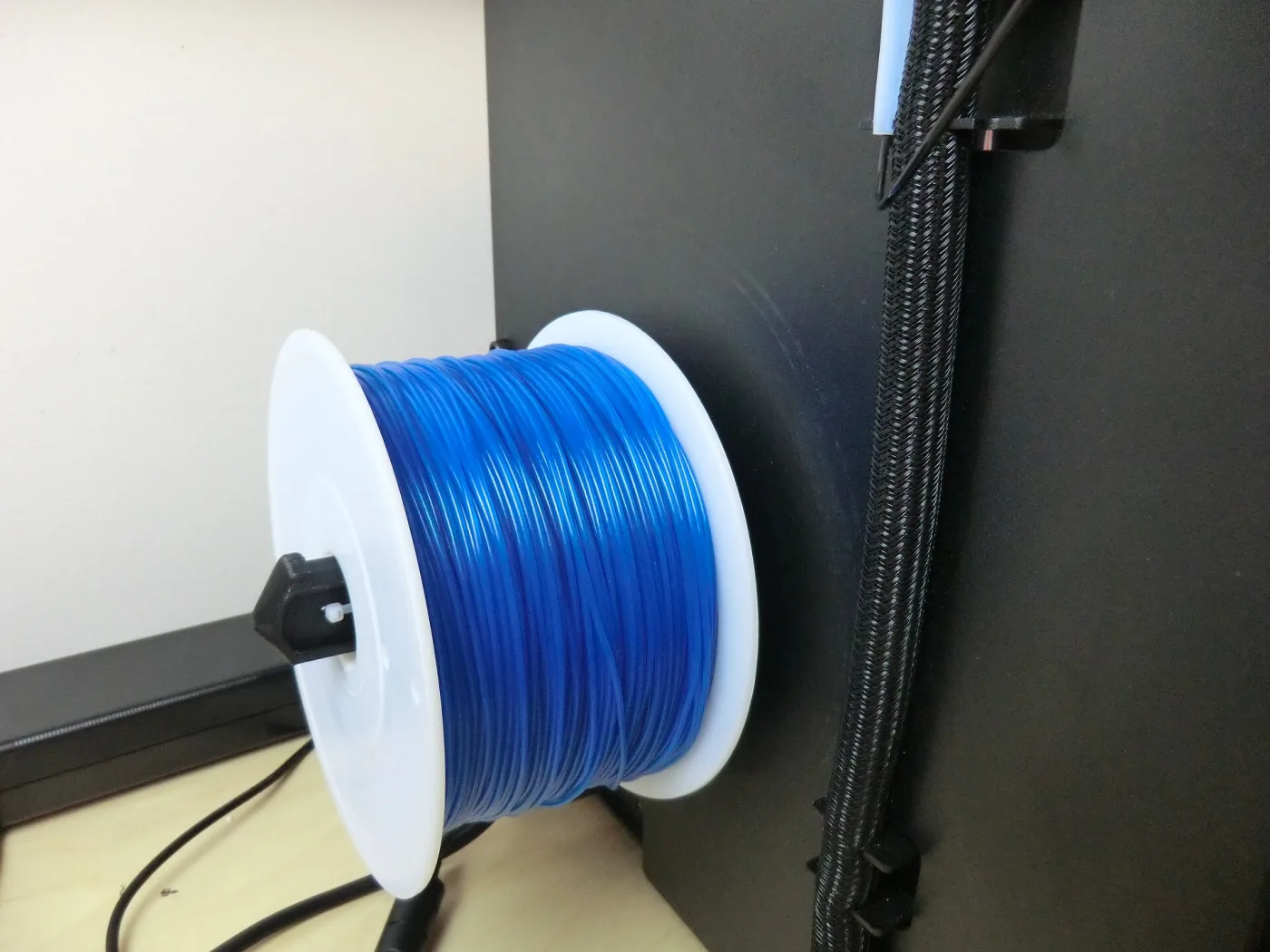
Xenia's XECARB PEBA-CF filament adds 15 wt% carbon fibre to a polyether-block-amide matrix. The supplier lists nominal density of 1.08 g/cm³ and heat-deflection temperature of 105°C, aiming to combine PEBA recovery with greater stiffness. That is interesting for light, repeatedly flexed or impact-loaded parts, but a short datasheet is not application qualification.
What the PEBA-carbon combination means
PEBA is an elastomer with hard polyamide and soft polyether blocks. Carbon fibre can raise stiffness and limit shrinkage, but can also introduce anisotropy, reduce ultimate extension and abrade the nozzle. Fifteen percent alone does not describe fibre length, orientation or interlayer bonding.
The stated 105°C HDT only has full meaning with its test load and standard. It is not continuous-use temperature, melting point or permission for a short thermal peak.
Processing window
Xenia recommends a 230–270°C nozzle and drying at 85°C for 6–8 hours. PEBA can absorb moisture; wet feedstock can cause bubbles, rough surfaces, unstable flow and weaker bonds. Verify drying by mass loss or moisture measurement and maintain closed dry feeding.
Use a wear-resistant nozzle with documented diameter. Fibre changes flow, so calibrate flow, pressure advance, cooling, speed and volumetric rate. A more flexible filament also makes supported feed path and extrusion stability important.
Where it may be useful
Potential uses include sports, protective, robotic and lightweight structural parts where a rigid composite would be brittle and an unfilled elastomer too soft. Do not infer conductivity or ESD safety from carbon fibre alone; those claims require volume and surface resistance data.
How to compare it
On identical geometry and orientation, measure density, mass, flexure, tension, impact, cyclic recovery and heat ageing. Compare XY with Z, dry with conditioned, and pre- with post-ageing states. Inspect surface wear and nozzle-diameter change after long builds.
Verified fact, vendor claim and conclusion
Fibre fraction, density, HDT and processing advice come from Xenia's primary product data. Stiffness-recovery benefits and applications are supplier positioning without public independent comparison. Our conclusion is that value depends less on one HDT number than the complete property profile across moisture, orientation and cyclic load.
Sources
The lead source is Xenia Materials' official XECARB PEBA-CF page. Formnext supplies event context and 3Druck's 5 November article served as topic detection.